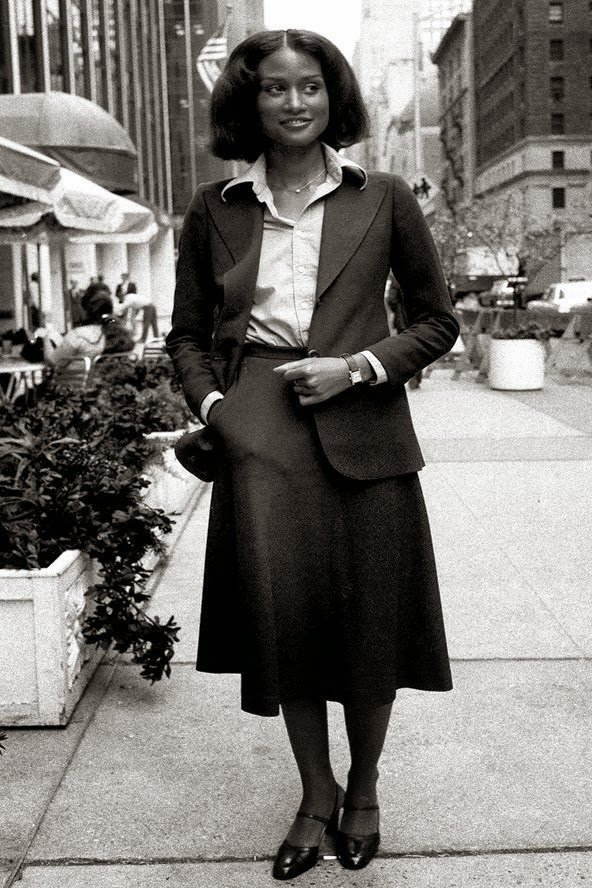
Beverly Johnson strides down a busy city sidewalk with the easy assurance of someone who helped redefine what fashion could look like in the 1970s. The street scene behind her—storefront awnings, planters, and distant traffic—adds a lived-in urban rhythm that makes the moment feel candid rather than staged, as if style has simply stepped out into everyday life.
Her outfit speaks in the clean, confident lines that made the decade so visually distinctive: a tailored blazer over a crisp collared shirt, paired with a long, flowing skirt and polished heels. The softly sculpted hair and minimal accessories keep the focus on silhouette and movement, capturing that era’s shift toward refined sportswear and modern elegance without needing elaborate flourish.
In the larger story of fashion and culture, images like this resonate because they document more than clothing—they register changing ideals and widening visibility in the public eye. For readers searching the history of 1970s fashion icons, Beverly Johnson’s presence here offers a vivid reminder of how editorial glamour and street-level realism could meet in a single frame, leaving a lasting imprint on style and representation.