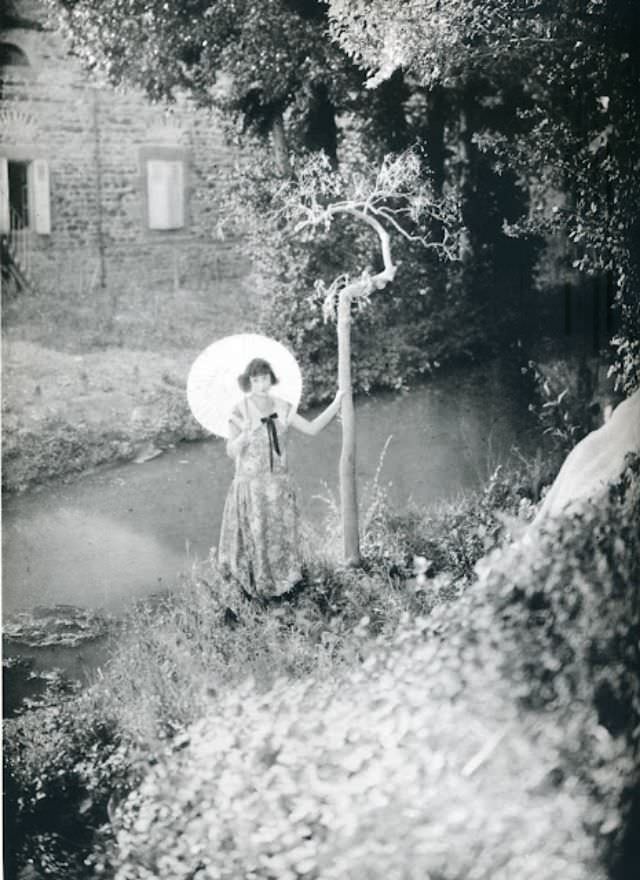
Soft light filters through dense leaves as a woman stands on a grassy riverbank, her pale parasol opening like a halo against the darker foliage. A slender tree beside her becomes both prop and companion, one hand resting on its trunk while the other steadies the umbrella. Across the water, a stone building with shuttered windows anchors the scene, lending a quiet, lived-in backdrop to an otherwise dreamlike outdoor portrait.
Fashion details—an airy, patterned dress and a dark ribbon at the neckline—place emphasis on personal style without drowning out personality. The pose feels relaxed rather than staged, suggesting a sitter who is more than a decorative figure: self-possessed, observant, and comfortable taking up space in nature. The photograph’s gentle blur and luminous highlights add to the sense of movement and immediacy often associated with Lartigue’s world of leisure and modern femininity.
Instead of treating Parisian women as mere “pretty faces,” portraits like this hint at individuality through gesture, setting, and mood. The parasol, once a fashionable accessory and practical shield, becomes a symbol of agency—an object held and controlled, not simply displayed. For readers searching fashion history, early twentieth-century portrait photography, or Lartigue-inspired views of Parisian culture, this image offers a poetic glimpse of elegance shaped by character as much as by clothes.