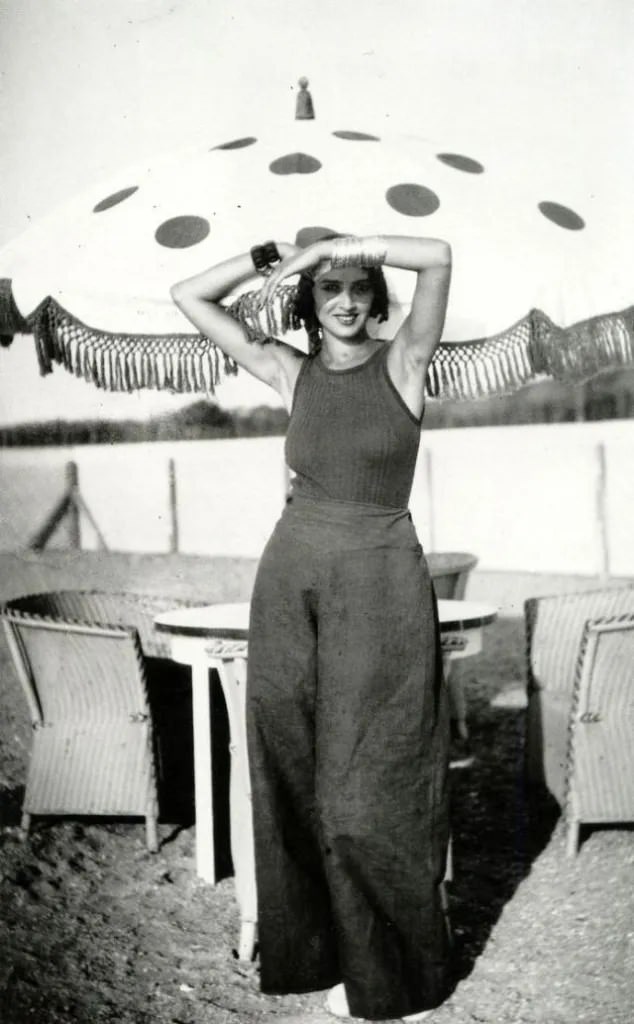
Beneath a large polka-dot parasol trimmed with fringe, Renée Perle stands at ease on a sandy terrace, arms lifted in a relaxed pose that feels both playful and self-possessed. The setting reads as seaside leisure—wicker chairs, a small table, and bright open sky—while her long, streamlined outfit emphasizes a modern silhouette associated with interwar fashion photography. Light and shadow fall cleanly across the scene, giving the portrait an intimate, sunlit candor rather than a studio-perfect polish.
Renée’s styling balances simplicity and allure: a sleeveless top, high-waisted wide trousers or a skirt-like drape, and stacked bracelets that catch the eye as her hands frame her face. The parasol acts like a stage prop, centering her in a circle of dots that echoes the era’s love of bold graphic patterns. Even without a named location, the composition suggests the fashionable coastal culture that helped define European glamour between the wars.
Tied to the title’s promise of a “love story” and intimate photographs, the image reads less like an advertisement and more like a private moment preserved with extraordinary care. It hints at the collaboration between muse and camera, where personal affection and artistic ambition can blur into the same gesture. For readers drawn to fashion and culture history, this portrait offers a vivid glimpse of how a Romanian fashion model could embody cosmopolitan modernity through pose, clothing, and an atmosphere of effortless summertime elegance.