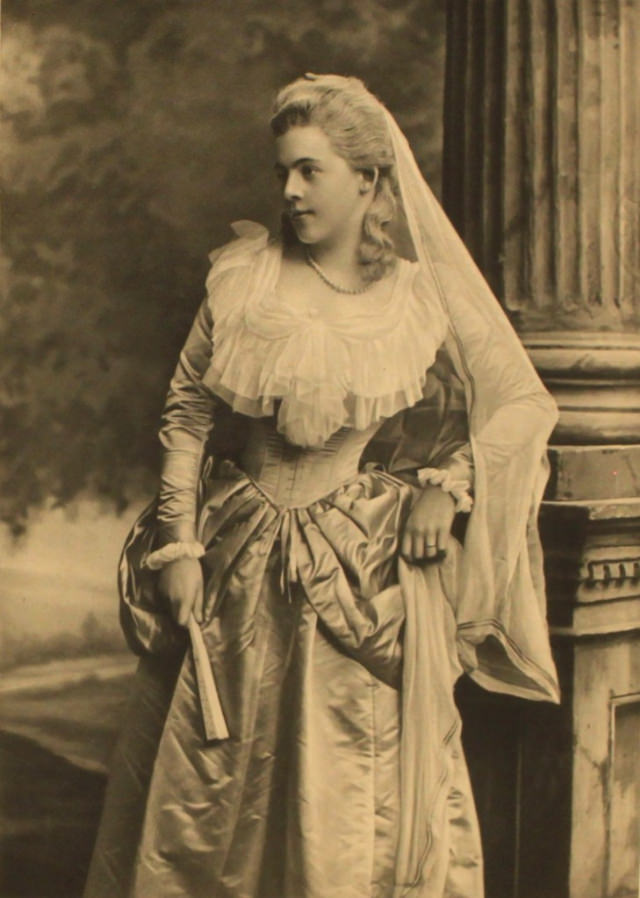
Poised in three-quarter profile, Mrs Baillie adopts the composed, slightly distant gaze associated with Thomas Gainsborough’s society portraits, turning her attention away from the camera as if toward an unseen audience. A long, light veil drifts from her hair and over her shoulder, softening the silhouette and lending a painterly haze that echoes eighteenth-century ideals of elegance. The studio backdrop and a monumental column at the edge of the frame reinforce the sense of staged grandeur, a deliberate nod to the classical settings favored in Georgian portraiture.
The costume—identified in the title as “Mrs James Baillie from a Gainsborough portrait”—leans into period detail through its structured bodice, layered fichu-like ruffles at the neckline, and the lustrous sheen of a full skirt gathered into rich folds. Long gloves add a formal finish, while a slender accessory in her hand reads like a fan or dance card, hinting at the rituals of an evening ball. Every element is designed to translate paint into fabric, transforming a well-known artistic style into wearable pageantry.
Linked to the Devonshire House Ball of 1897, the photograph belongs to a moment when elite fancy dress became a living gallery of British art and history. Guests did more than “dress up”: they performed lineage, taste, and cultural literacy by embodying portraits and periods recognizable to their peers. As a fashion-and-culture document, this image captures the late-Victorian fascination with the Georgian past, and the way photography helped preserve these elaborate historical costumes long after the music and candlelight had faded.