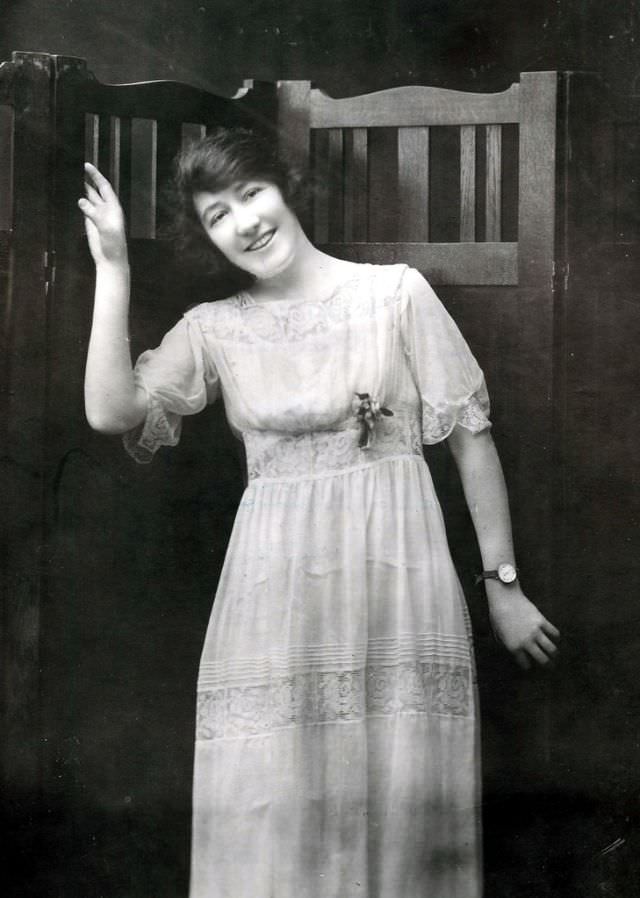
Leaning lightly against a tall wooden screen, a young woman smiles with the easy confidence associated with 1920s modernity. Her softly waved bob frames a bright expression, while her relaxed pose—one arm lifted, the other resting at her side—turns a simple studio-like setting into a moment of personality and charm. The dark backdrop and vertical slats behind her heighten the luminous quality of her dress and face, a classic portrait style that still reads as intimate and direct.
She wears a pale, floaty dress with lace and delicate detailing, its airy sleeves and gently gathered waist suggesting the era’s shift toward comfort and movement. A small floral accent pinned near the bodice draws the eye, and a wristwatch adds a practical, contemporary note—an everyday accessory that signals changing attitudes to time, work, and independence. The overall look sits comfortably within flapper-era fashion culture: feminine yet unfussy, designed for a life lived beyond formal parlors.
For anyone searching Melbourne women’s fashion history, this portrait offers a vivid glimpse of how glamour could be expressed without sequins or spectacle. It speaks to the broader 1920s story—new silhouettes, personal freedom, and the rise of photographic portraiture as a way to craft identity. Even without names or a precise venue, the image resonates as a stylish record of interwar culture and the confident self-presentation of a fashionable young woman.