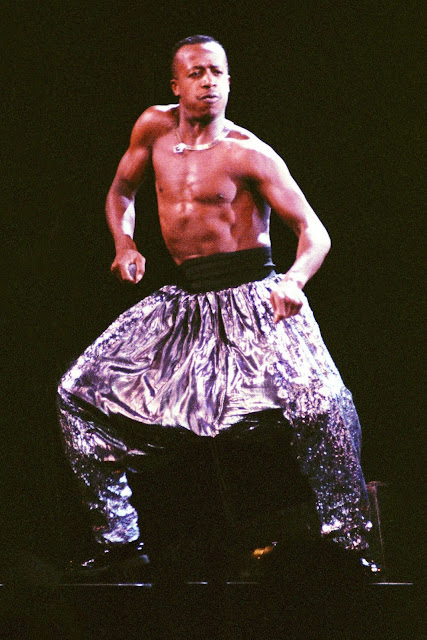
Under harsh stage lighting, a muscular performer moves mid-step with the kind of snap that made late-1980s pop and hip-hop feel unstoppable. His torso is bare, a chain catching the light at his neck, while the dark background isolates the action so the body language reads like punctuation—quick, confident, and built for the beat. The moment suggests a live show atmosphere where dance, attitude, and fashion were inseparable.
Nothing pulls focus more than the exaggerated silhouette of MC Hammer pants: a high, cinched waist and dramatically billowed thighs that taper down into fitted, shimmering legs. The metallic fabric reflects light in ripples, turning each move into a visual effect, almost like the clothing is part of the choreography. Designed for freedom of motion and maximum spectacle, the look telegraphed speed, swagger, and the era’s appetite for bold, camera-ready style.
Fashion trends rarely announce themselves as cultural shorthand, yet these pants became an instant symbol of 1980s and early-1990s streetwear crossing into mainstream entertainment. They speak to a time when music television, touring stages, and dance crews helped translate subcultural aesthetics into household fashion references. Remembered with affection and a bit of disbelief, Hammer pants remain a vivid keyword for retro fashion history—proof that sometimes the loudest legacy is stitched into the clothes.