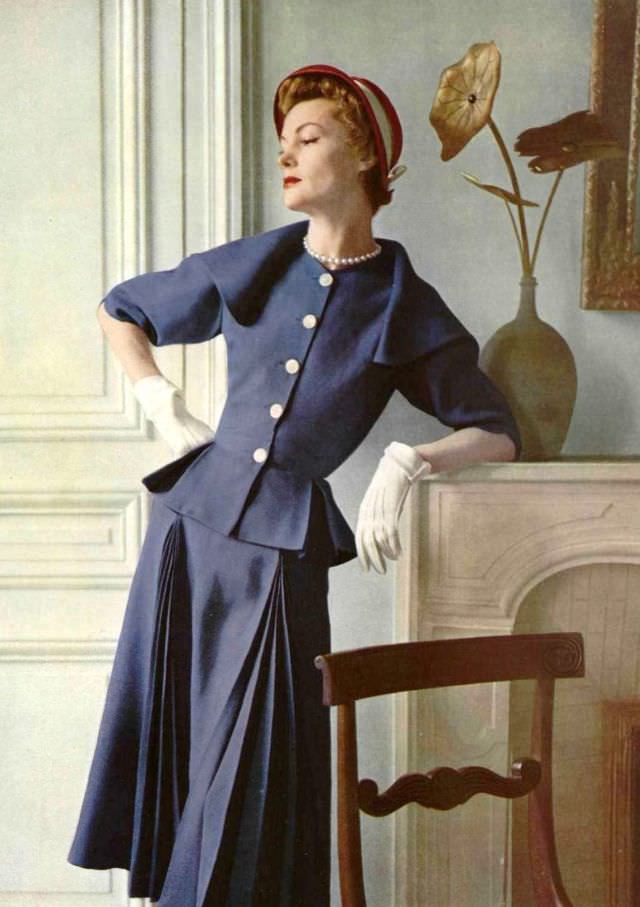
Poised beside a pale mantel, the model turns in profile with a composed, almost sculptural calm, letting the blue linen two-piece speak through line and proportion. The jacket’s broad, cape-like collar frames the shoulders, while a neat row of light buttons draws the eye down to a nipped waist and a gently flared peplum. White gloves and a short strand of pearls sharpen the look’s polish, and the small hat—tilted with mid-century confidence—adds a note of controlled drama without disturbing the ensemble’s restraint.
Grès was celebrated for making simplicity feel monumental, and the cut here suggests that same couture intelligence: architecture disguised as ease. The skirt falls in deep, disciplined folds that echo classical drapery, balancing the structured top with movement and weight. Even in a quiet interior setting, the design reads as high fashion—an example of postwar elegance where impeccable tailoring and fine fabric do the work that excess ornament once did.
A vase with a single anthurium-like bloom and the spare furnishings provide a subtle stage, reinforcing the photo’s message of refinement through understatement. The muted palette, the crisp accessories, and the careful pose together create a timeless fashion history moment—1951 haute couture rendered with calm authority. For readers searching vintage couture, Madame Grès, or 1950s fashion photography, this image offers a concise lesson in why her legacy endures: precision, restraint, and beauty built from perfect seams and purposeful drape.