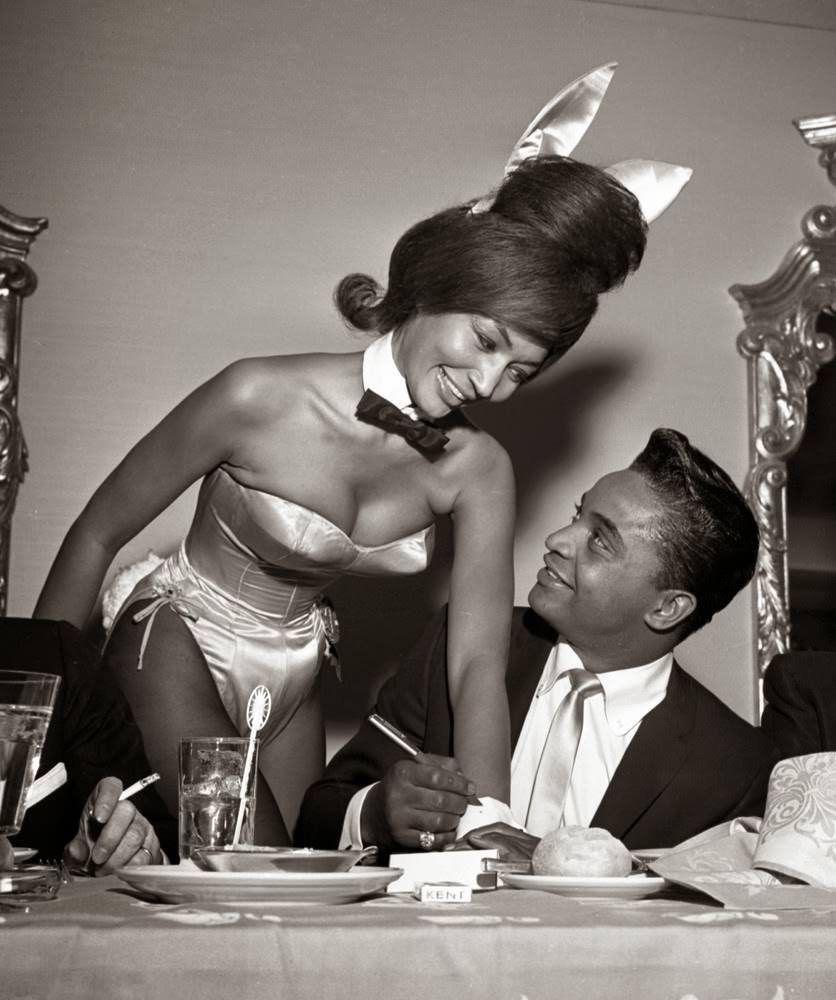
Mid-century nightlife comes into focus at a formal dinner in the Playboy Club, where rock and roll singer Jackie Wilson leans over a linen-covered table to sign the crisp cuff of a Playboy Bunny. The moment is intimate and theatrical at once: his pen poised, his attention fixed on the small patch of fabric, while she smiles down with an ease that suggests this kind of spotlight was part of the job. Glassware, plates, and the soft clutter of a banquet setting anchor the scene in the rituals of an industry event rather than a stage performance.
Glamour here isn’t just in the satin costume and iconic ears, but in the choreography of celebrity and service that defined the early-1960s club circuit. The Bunny’s outfit reads like a uniform—carefully tailored, deliberately branded—while Wilson’s suit and seated posture signal the guest of honor enjoying a fan’s request in reverse. It’s a playful exchange that hints at how entertainment culture, fashion, and publicity blended in spaces designed to feel exclusive, modern, and a little daring.
New York in 1962 was thick with crossover worlds—music, film, and high-society fundraising—making the Motion Picture Pioneers Association dinner a fitting backdrop for this small, camera-ready interaction. Autograph culture, club spectacle, and the era’s carefully managed sensuality all meet in a single signed cuff, turning a fleeting gesture into a lasting artifact. For readers drawn to vintage pop culture, Playboy history, or classic rock and roll, the photograph preserves the texture of an evening when celebrity felt close enough to touch.