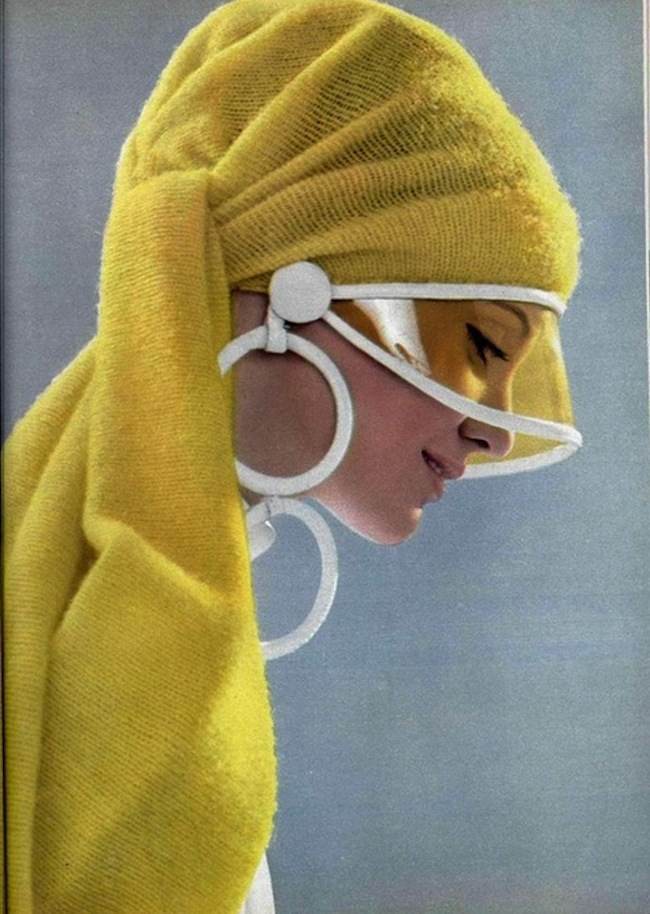
A bold, towel-like hood in sunny yellow wraps the model’s head and drapes down the neck, turning everyday terry cloth into something futuristic. Over her eyes sits a gold-tinted visor framed by crisp white plastic, while oversized circular earpieces echo the clean geometry of mid-century “space age” design. Set against a plain blue background, the profile pose reads like an advertisement for tomorrow—sleek, streamlined, and intentionally otherworldly.
During the Space Race era, fashion leaned hard into optimism about technology, translating helmets, visors, and cockpit hardware into wearable statements. The mix of soft fabric and hard, glossy components hints at a culture fascinated by new materials and industrial forms, where sportswear, leisurewear, and costume began to overlap. This kind of styling—part protective gear, part mod accessory—fits squarely within 1960s fashion and culture, when designers and brands sold the future in bright color and bold plastic.
The title’s claim that the England cricket team ordered hundreds of these adds an intriguing twist: what looks like sci-fi headgear also suggests practical performance gear, perhaps for sun, glare, or training spectacle. Whether used as a functional shield or a promotional novelty, the piece captures how quickly avant-garde trends could spill into mainstream institutions. It’s a vivid reminder that the decade’s “space race fashion revolution” wasn’t confined to runways—it could reach the dressing rooms of traditional sport as well.