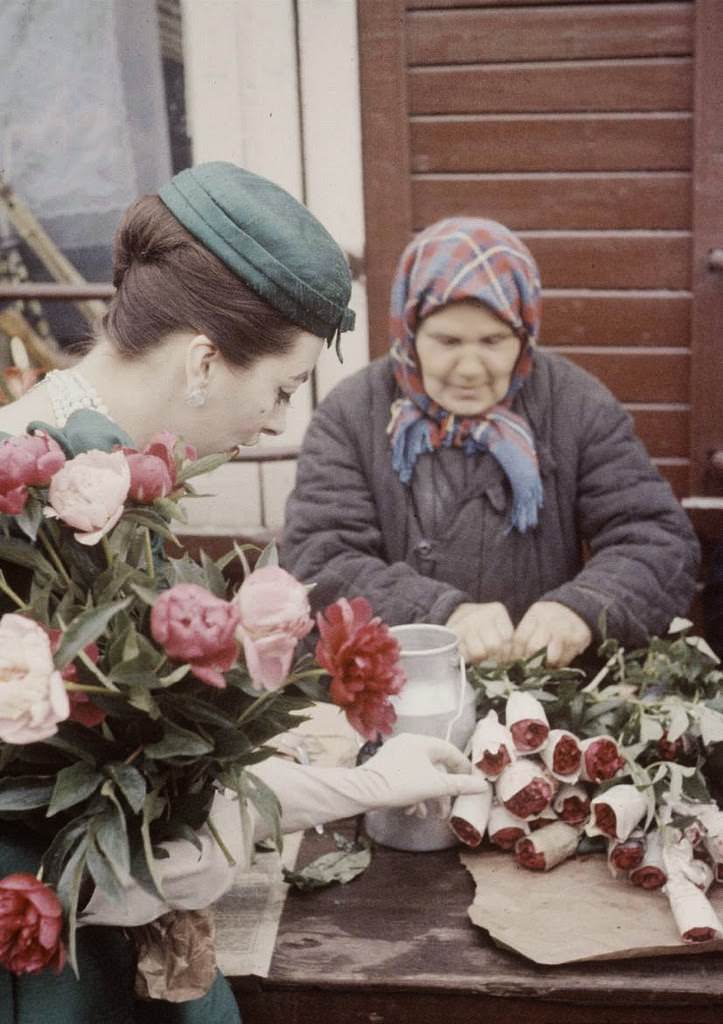
Silk gloves, a sculpted hat, and an armful of lush blooms set an unexpected tone for the street-level world suggested by this scene. A stylish visitor leans in toward a working table where bouquets are being assembled, her polished profile contrasted with the rougher textures of paper wrap, stems, and a plain metal container. The color palette—deep reds and pinks against muted greens and browns—adds to the sense of a fleeting, glamorous moment unfolding in everyday surroundings.
Across the table, the florist’s headscarf and practical coat speak to routine, labor, and local custom, while the other figure reads as fashion-forward and unmistakably Western in silhouette. That quiet meeting point—between couture-like elegance and ordinary commerce—echoes the cultural jolt hinted at in the title, when Dior-inspired style suddenly felt visible on Soviet streets. Rather than a runway, the encounter happens amid flowers and conversation, where curiosity and careful attention replace any grand spectacle.
For readers interested in 1959 Moscow, Cold War cultural exchange, and the history of fashion as soft power, the photograph offers a grounded way into the story. It suggests how “fashion shock” could be experienced not as propaganda or headline, but as a close-up human interaction: hands arranging blossoms, eyes studying fabrics, and two worlds briefly sharing the same tabletop. In that small space, the boundary between Soviet daily life and international glamour looks less like a wall and more like a doorway.