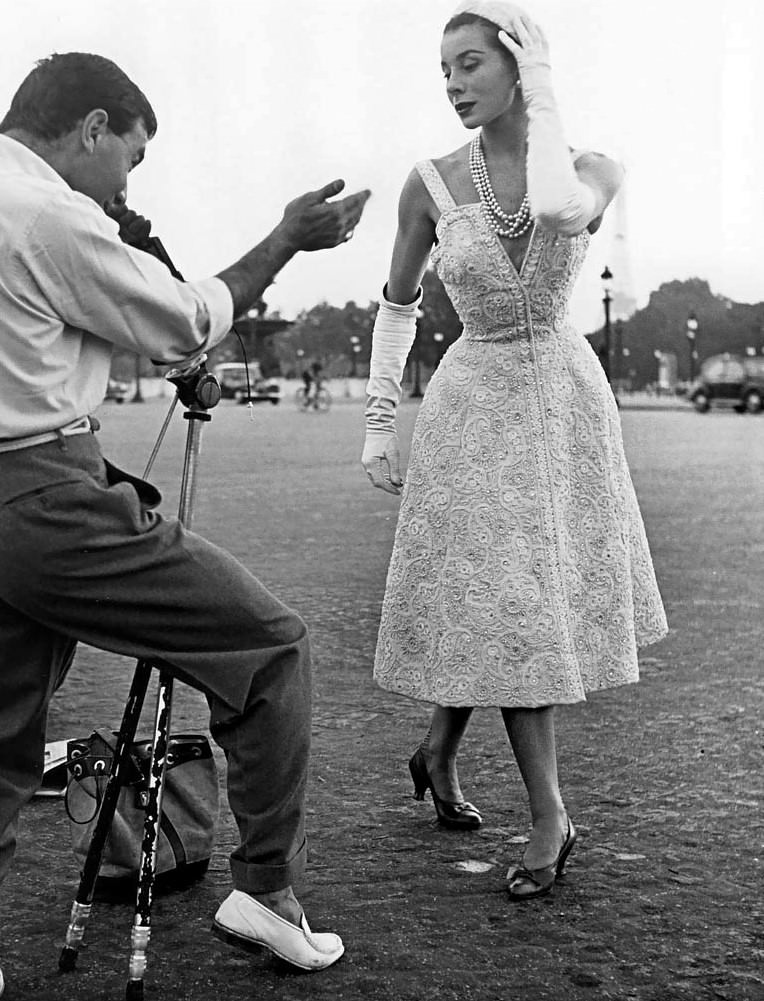
On an open stretch of pavement, Bettina Graziani stands poised while a photographer leans in from the left, gesturing as if refining the exact angle of her chin and shoulder. The scene feels candid yet controlled, the kind of on-location fashion moment where the work behind glamour remains visible: equipment, posture, and direction all sharing the frame. In the distant background, faint silhouettes of trees, streetlights, and passersby anchor the shoot in everyday city life rather than a studio set.
Her Autumn–Winter 1953 look balances refinement with modern ease, built around a sleeveless, mid-calf dress richly patterned with an ornate, lace-like texture. Long white opera gloves and a layered pearl necklace heighten the formal mood, while her low heels and relaxed stance keep it wearable and contemporary for the era. One hand lifts toward her hair in a practiced, elegant gesture, suggesting the model’s role as both muse and active collaborator in shaping the image.
Fashion photography in the early 1950s often played with this contrast—couture styling placed against real streets and open air—to sell a lifestyle as much as a garment. Graziani’s presence embodies that postwar ideal of polished femininity, where meticulous detailing and clean lines communicated confidence, prosperity, and cultural renewal. For readers searching vintage fashion, 1950s style, or Bettina Graziani photos, the image offers a crisp glimpse of how French modeling helped define the visual language of mid-century fashion and culture.