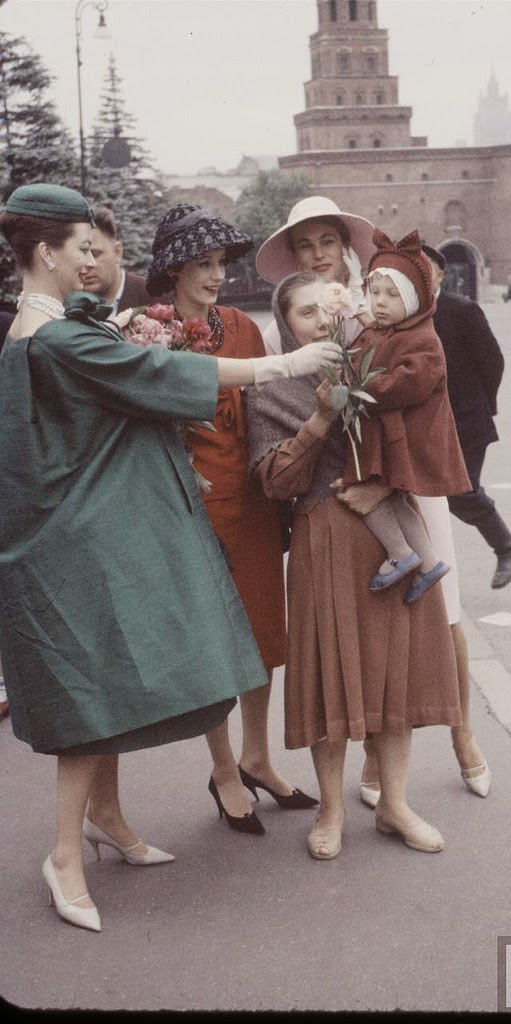
Silk gloves, sculpted hats, and jewel-toned coats turn an ordinary Moscow sidewalk into an improvised runway, where a small crowd leans in as flowers are offered and received. The women’s carefully coordinated silhouettes—cinched waists, full skirts, polished heels—carry the unmistakable language of Western couture into a Soviet streetscape of stone walls and monumental towers. Even without a catwalk, the posture and poise suggest a public performance, part fashion moment and part cultural encounter.
What makes the scene so arresting is its intimacy: a mother balancing a bundled child, faces close together, a brief exchange happening at arm’s length. The contrast between the elegant tailoring and the practical everyday clothing around it hints at the “shock” in the title—a sudden meeting of two visual worlds, each reading the other in real time. Details like the handbags, headwear, and immaculate styling feel less like costume than a confident statement about modernity, femininity, and taste.
Set against the charged atmosphere of 1959, the photograph becomes more than a charming street portrait; it’s a snapshot of soft power, tourism, and curiosity under the Cold War gaze. “When Dior Took Over the Soviet Streets” evokes the moment Western fashion houses and Soviet audiences collided, not in private salons but out in public where anyone could look, compare, and whisper. For readers interested in fashion history, Moscow culture, and the politics of style, this image offers a vivid entry point into how clothing could become headline-worthy diplomacy.