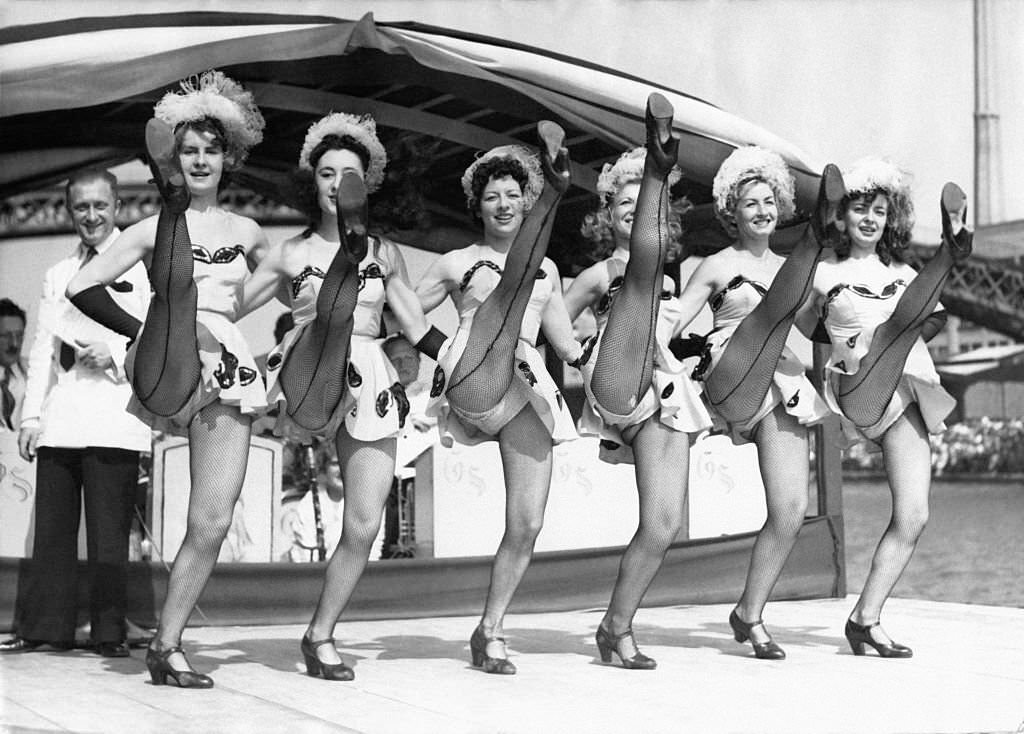
Legs fly skyward in a perfectly timed kick line as Moulin Rouge dancers deliver the French cancan with fearless precision. Their ruffled skirts, feathered headpieces, and fishnet stockings create a whirl of texture and contrast, while bright stage lighting flattens the scene into crisp highlights and shadows. The camera catches the moment mid-strike, when athletic control and playful showmanship fuse into a single, iconic pose.
Behind the chorus line, a smiling master of ceremonies in a white jacket lingers at the edge of the stage, reinforcing the nightclub’s polished spectacle. The performers’ costumes—decorative bodices, high heels, and bold patterns—speak to mid-century Parisian entertainment culture, where glamour was engineered as carefully as choreography. Even in stillness, the image implies music, applause, and the percussive rhythm of heels meeting the boards.
Moulin Rouge, long synonymous with Paris nightlife, appears here as both workplace and dreamscape, selling a fantasy of exuberance after the hardships of earlier decades. The cancan’s famous high kicks and synchronized formations also hint at the discipline demanded behind the curtain, turning “effortless” fun into a physically demanding art. For anyone searching fashion and culture history, this 1955 view of the French Cancan captures the enduring brand of cabaret—bright, bold, and expertly staged.