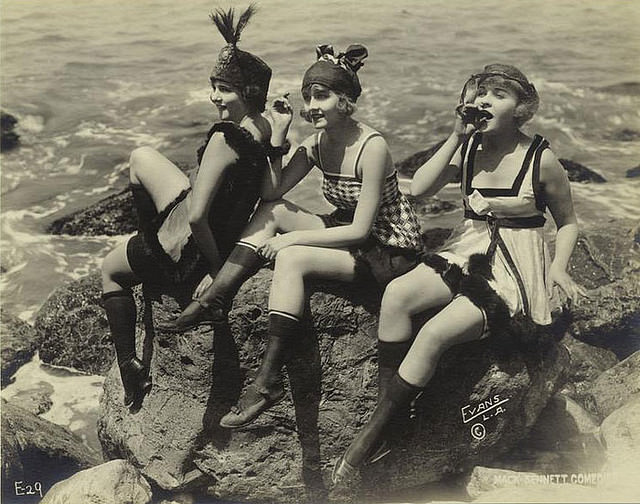
Perched on sea-wet rocks at the edge of the surf, three women pose with the easy confidence of a beachside outing, their expressions playful and self-assured. Their swimsuits—shorter, more fitted, and clearly designed for movement—hint at a turning point in early 1900s leisure culture, when “bathing” began to look less like cautious wading and more like recreation. Details like snug caps, bold trims, and sturdy lace-up boots speak to a moment when modesty still mattered, yet practicality was steadily winning ground.
Fashion choices in this era weren’t merely about style; they reflected shifting ideas about women’s bodies in public, athleticism, and modern life. The mix of patterned fabric and contrasting bands suggests the rise of ready-made swimwear with eye-catching design, moving away from heavier, dress-like garments meant to conceal rather than perform. Even the footwear—so different from today’s beach norms—reminds us how early seaside fashions balanced protection, propriety, and the realities of rocky shorelines.
For readers exploring how women’s swimsuits changed over time, this photograph offers more than nostalgia: it’s a snapshot of social change stitched into seams and silhouettes. The confident poses, coordinated accessories, and spirited setting evoke the growing popularity of seaside holidays and the new visibility of women in public leisure spaces. Taken together, these bathing beauties help trace the gradual evolution toward modern swimwear—one hemline, one fabric choice, and one daring day at the water at a time.