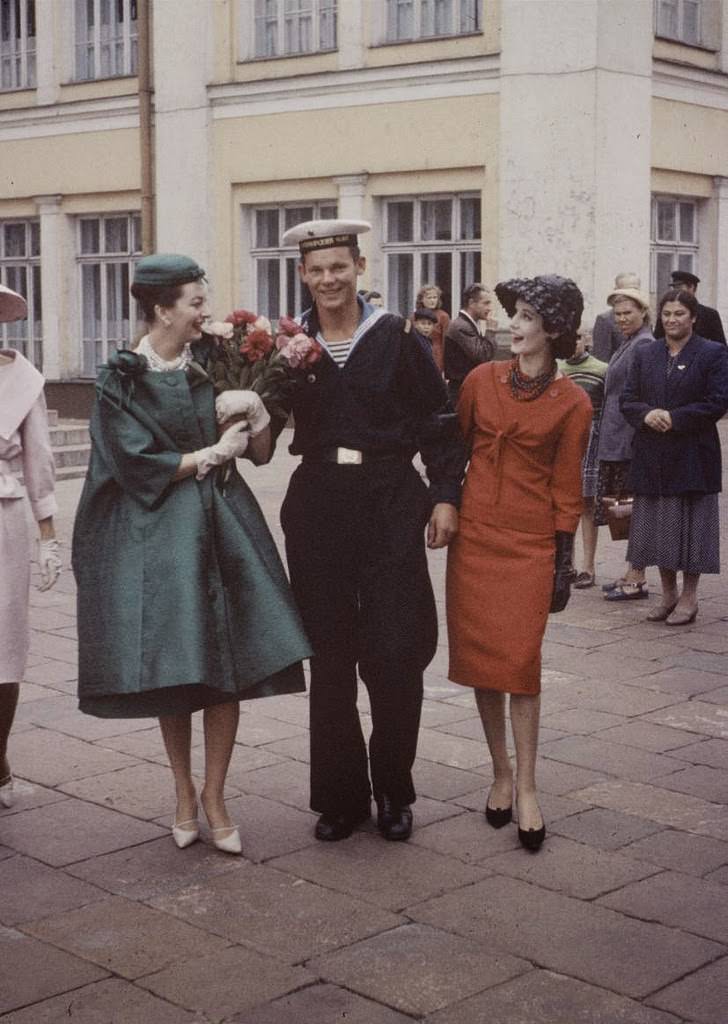
Color spills onto an ordinary Moscow sidewalk, where tailored elegance turns a quick stroll into a small public spectacle. A sailor in a dark uniform grins between two impeccably dressed women—one in a full, deep-green coat and matching hat, the other in a fitted red dress with a dramatic black headpiece—while passersby linger behind them, curious and watchful. The bouquet of roses at center feels like a prop from a different world, softening the hard geometry of the street and the pale, institutional façade.
1959 sits at the heart of the title’s “fashion shock,” when Western couture—Dior above all—became a talking point in a city better known to outsiders for ideology than hemlines. Here, clothing reads like diplomacy: careful silhouettes, polished shoes, and confident posture quietly announce access to style, taste, and modernity. Even without a runway in sight, the street becomes a stage where private aspiration meets public scrutiny.
What makes the moment unforgettable is the crowd’s reaction as much as the outfits themselves, a reminder that fashion history is also social history. The onlookers’ practical coats and reserved expressions contrast with the couture-like drama in the foreground, hinting at the tensions of consumer desire, cultural exchange, and Cold War curiosity. For readers drawn to Dior in Moscow, Soviet street style, and the cultural aftershocks of 1959, this photograph offers a vivid, human-scale snapshot of how trends travel—and how a city looks back when they arrive.