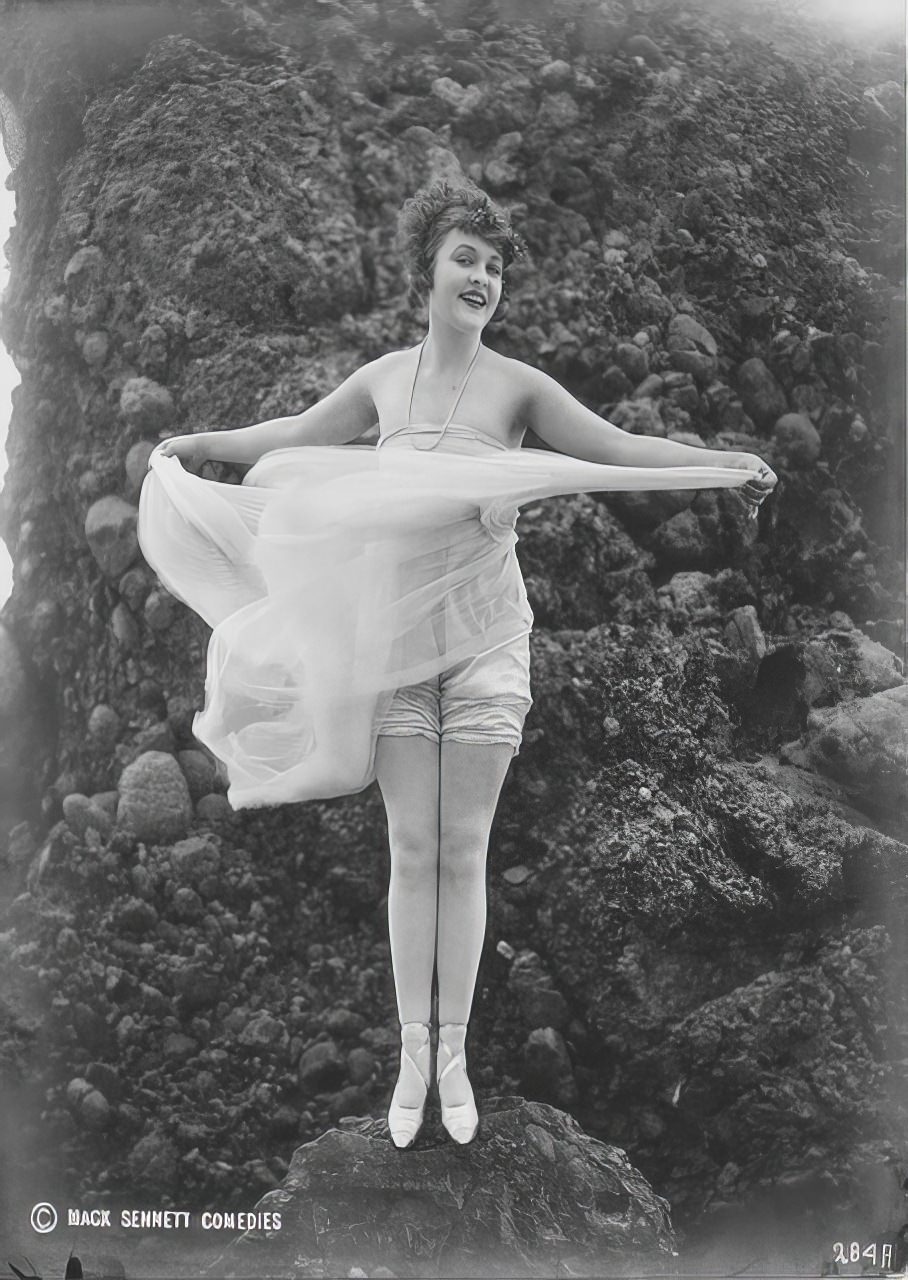
Against a rugged backdrop of seaside rocks, a smiling bather strikes a playful pose, lifting a sheer wrap so it billows like a sail. The outfit pairs a simple, form-fitting suit with short legs and a lightweight cover—an eye-catching mix of modesty, motion, and performance that defined the era’s “bathing beauty” aesthetic. Details like the close-fitting cap, the confident stance, and the studio-like composition hint at how beachwear was marketed as modern entertainment as much as practical clothing.
Early 1900s women’s swimsuits were caught between Victorian propriety and the new freedoms of leisure culture, and photographs like this make that transition easy to read. As hemlines crept upward and fabrics became lighter, swim attire started to prioritize movement: wading, swimming, posing, and strolling along the shore without the heavy layers that had once governed public bathing. The result was a silhouette that still suggested decorum while acknowledging the body’s athletic potential—an important stepping-stone in the wider story of changing fashion and social norms.
Long before today’s bikini debates and performance swimwear, the beach served as a public stage where ideas about femininity, health, and modern life were negotiated in cloth and camera angle. This post explores how women’s swim fashion evolved over time, using a striking historical photo to trace the shift from covered-up bathing costumes to more streamlined designs. If you’re interested in vintage style, early beach culture, and the visual history of women’s swimsuits, the image offers a vivid starting point for the story.