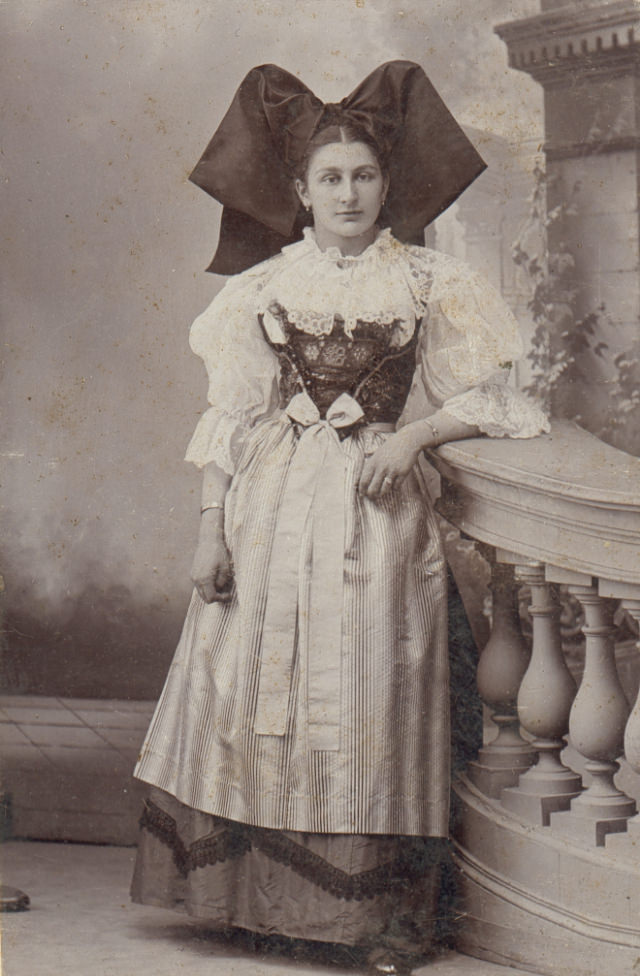
Poised beside a studio balustrade, an Alsatian woman faces the camera with a steady, unembellished gaze, her silhouette instantly defined by the region’s iconic oversized bow headdress. The monumental ribbon frames her head like a dark halo, turning a simple portrait into a statement of identity and local pride. Subtle wear in the print and the softly painted backdrop evoke the look of early 20th-century studio photography, when regional costume portraits were cherished as keepsakes.
Her traditional dress layers texture upon texture: a crisp lace blouse with voluminous sleeves, a fitted bodice that emphasizes structure, and a long striped skirt gathered neatly at the waist. A pale apron ties in front, its broad ribbons and bow echoing the dramatic headpiece while adding a lighter counterpoint to the darker corset-like vest. Small details—trim at the hem, the careful arrangement of fabric, the restrained jewelry—suggest clothing intended not only for daily life but also for presentation, ceremony, and cultural display.
Within the broader story of Alsace, such attire speaks to a crossroads of fashion and folklore, where community traditions were worn as visibly as they were remembered. Portraits like this helped preserve distinctive regional styles at a time when modern dress and changing social rhythms increasingly reached into rural wardrobes. For collectors and researchers of European folk costume, early 1900s women’s fashion, and French regional heritage, the image offers a vivid reference point: a single figure, meticulously dressed, carrying the visual language of her homeland into the lens.