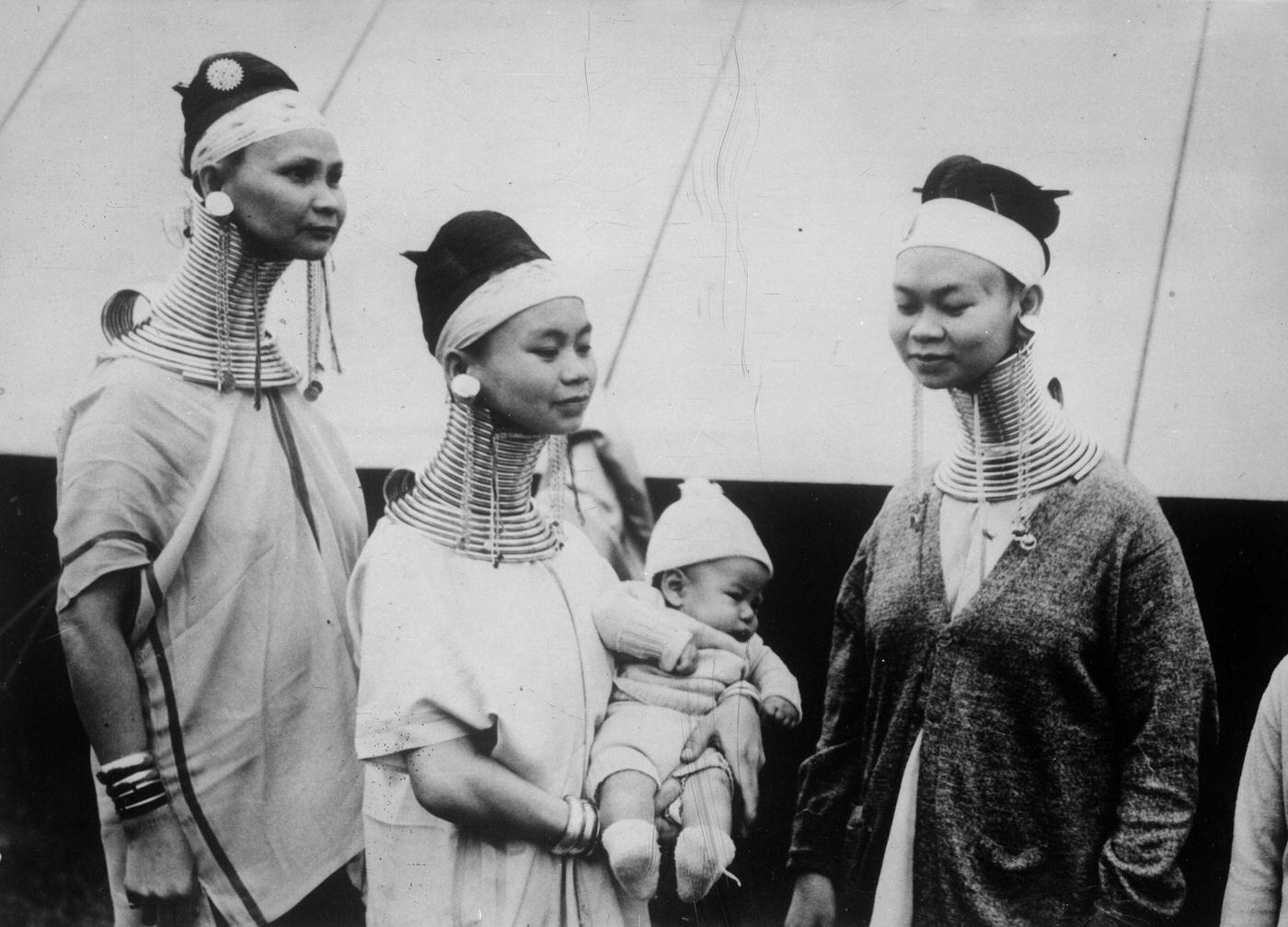
Three women stand closely together, their long neck coils catching the light in neat, metallic rings that stack from collarbone to jaw. Headwraps and rounded earrings frame their faces, while simple garments—one draped like a shawl, another like a cardigan—soften the gleam of the jewelry. In the center, one woman steadies a bundled baby in a knit cap, an intimate detail that shifts the scene from spectacle to family portrait.
The title places them in London in 1930, a moment when the city’s appetite for “world” displays and imported cultural curiosities often drew visitors into public view. Seen through that lens, the photograph becomes a record of encounter as much as attire: traditional adornment presented in a metropolitan setting, with the women’s calm expressions suggesting patience, composure, and perhaps guardedness. The neck rings—frequently associated with Kayan Lahwi women and widely nicknamed “giraffe women”—operate here as both cultural identity and the focus of an outsider’s camera.
Clothing and body ornament function like a living archive in this image, telling a story of fashion, tradition, and the ways colonial-era audiences consumed difference. The crisp coils, layered textiles, and carefully wrapped hair speak to deliberate aesthetics rather than novelty, even as the photograph’s framing hints at staged presentation. For readers searching terms like “giraffe women of Burma,” “neck rings,” and “London 1930,” the enduring value lies in its tension: a striking cultural portrait that also invites reflection on how such portraits were commissioned, circulated, and understood.