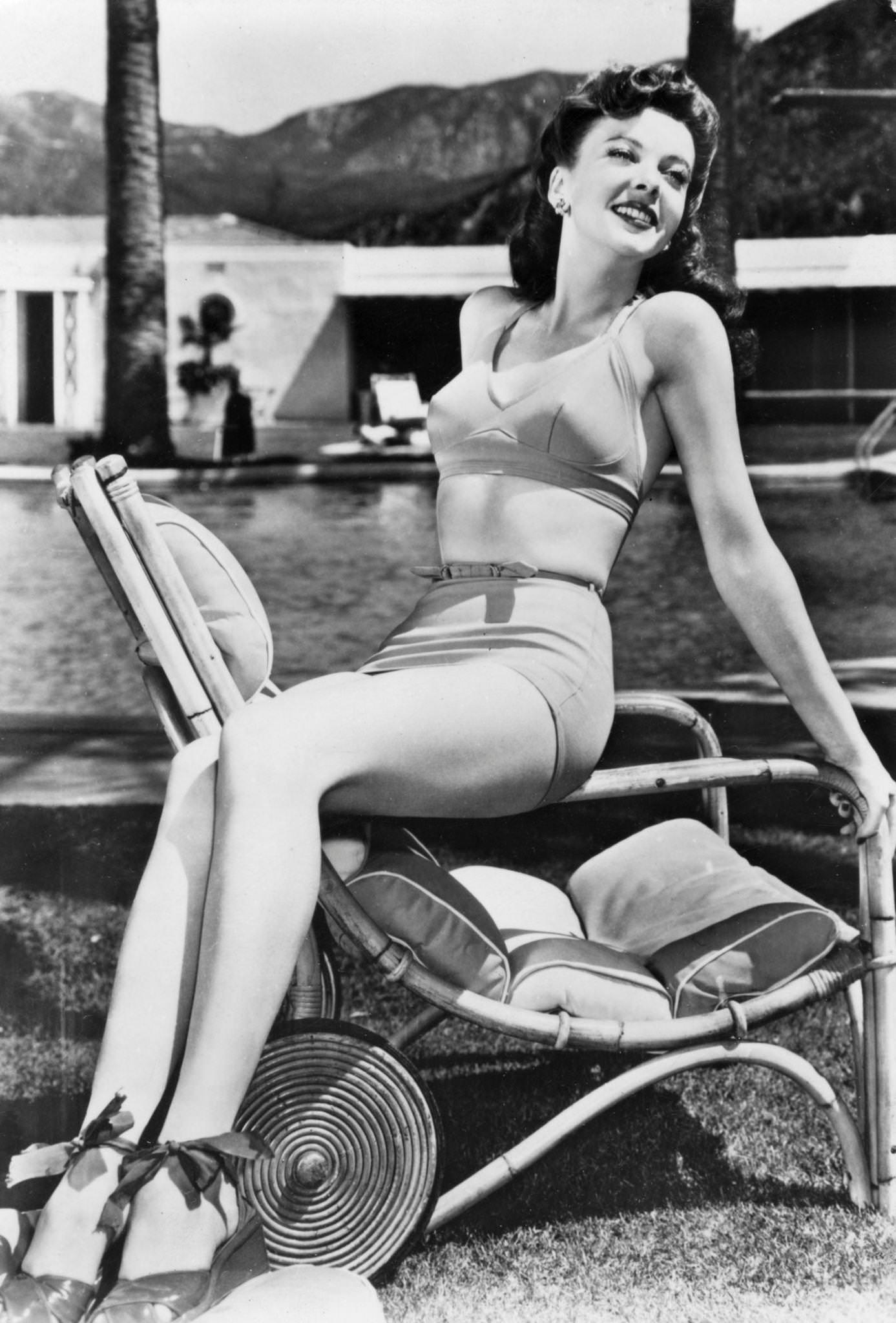
Ida Lupino reclines on a low wicker lounge chair beside a shimmering pool, turning her face toward the light with a wide, unguarded smile. The scene is framed by a palm trunk and distant hills, the kind of resort-like backdrop that fed mid-century fantasies of leisure and modern comfort. Even in a casual setting, her carefully styled hair and poised posture carry the polish of classic Hollywood portraiture.
A two-piece swimsuit anchors the composition, with a structured bra-style top and high-waisted bottoms that reflect 1940s swimwear design—more tailored than revealing, built to suggest both athletic ease and pin-up glamour. The crisp lines of the suit echo the clean geometry of the poolside architecture behind her, while the chair’s curved rattan and scattered cushions soften the look with beach-house warmth. Details like the ankle-tied sandals and studio-smooth lighting place the image squarely in the era’s fashion-and-culture crossover, when publicity stills helped define what “summer” looked like on screen and off.
Beyond the sunlit styling, the title’s reminder matters: Lupino was not only an English film actress but also a director at a time when Hollywood offered very few women that authority—often noting her as the only female director working in the industry then. That tension between glamorous visibility and behind-the-camera power gives the photo its deeper resonance, turning a poolside pose into a quiet statement about ambition and control. As a piece of 1940s celebrity photography, it works both as swimsuit history and as a snapshot of a woman negotiating fame, craft, and leadership in a male-dominated studio system.