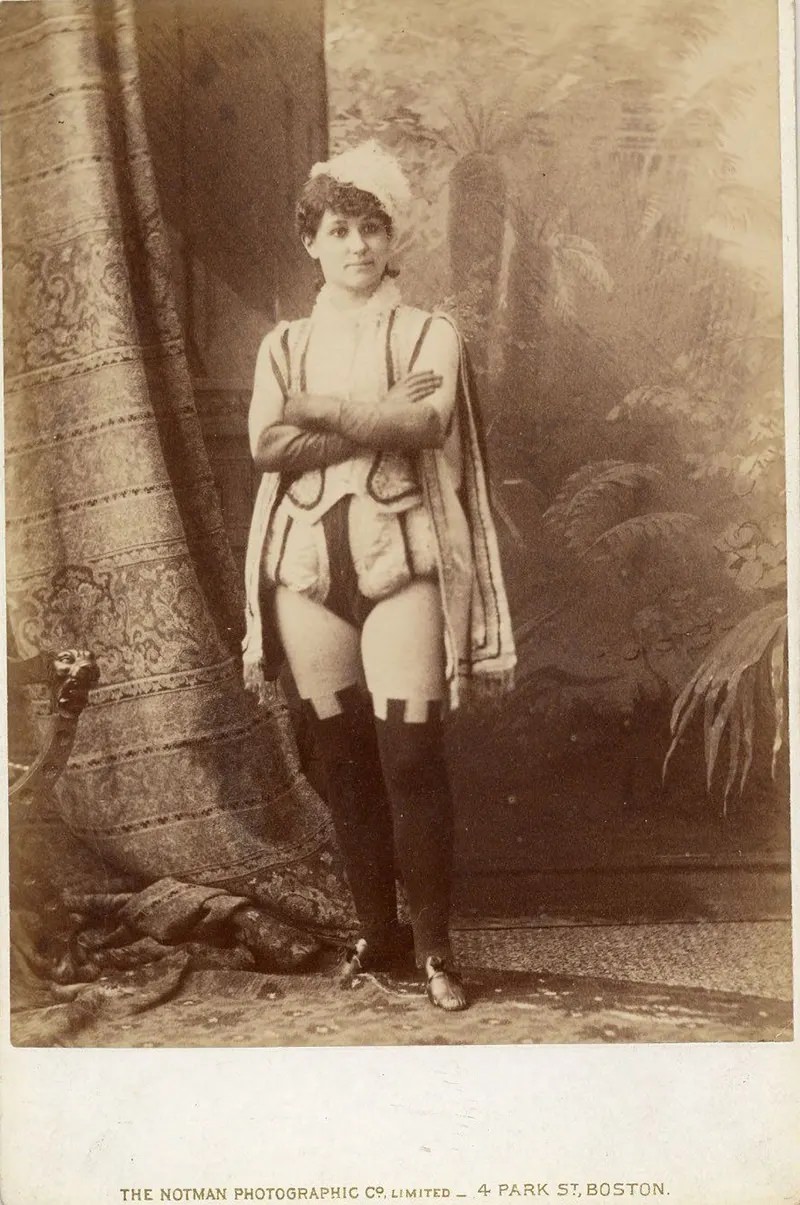
Arms folded and gaze steady, Miss Darcey poses in a short, male-coded Renaissance costume that blends theatrical bravado with studio polish. The outfit is built around a fitted, high-collared bodice and abbreviated trunk-hose silhouette, paired with dramatic over-the-knee leggings that draw the eye to the strong lines of the stance. A feathered headpiece and cape-like drape add flourish, making the ensemble read as stagewear designed to be seen from the back row.
Behind her, a painted backdrop and heavy patterned drapery create a faux-historical setting, the sort favored by late Victorian photographers for performers’ portraits and publicity. The sepia tones soften details while still catching the contrast between pale fabric, dark stockings, and the gleam of buckled shoes. At the bottom edge, the studio imprint places the production in Boston, tying this burlesque-themed costume portrait to the commercial photography networks that circulated celebrity images in the era.
Such “Renaissance” styling was less about strict authenticity than about playful costume history—an excuse for bold shapes, exposed leg lines, and a hint of cross-dressed swagger that burlesque audiences understood immediately. The photograph sits at the intersection of fashion and performance culture, where women performers tested boundaries through character, wardrobe, and pose while still working within the period’s conventions of respectability and spectacle. For modern viewers searching Victorian burlesque dancers, 1890s stage costumes, or gender-bending theatrical fashion, Miss Darcey’s portrait offers a vivid window into how popular entertainment dressed the past to challenge the present.