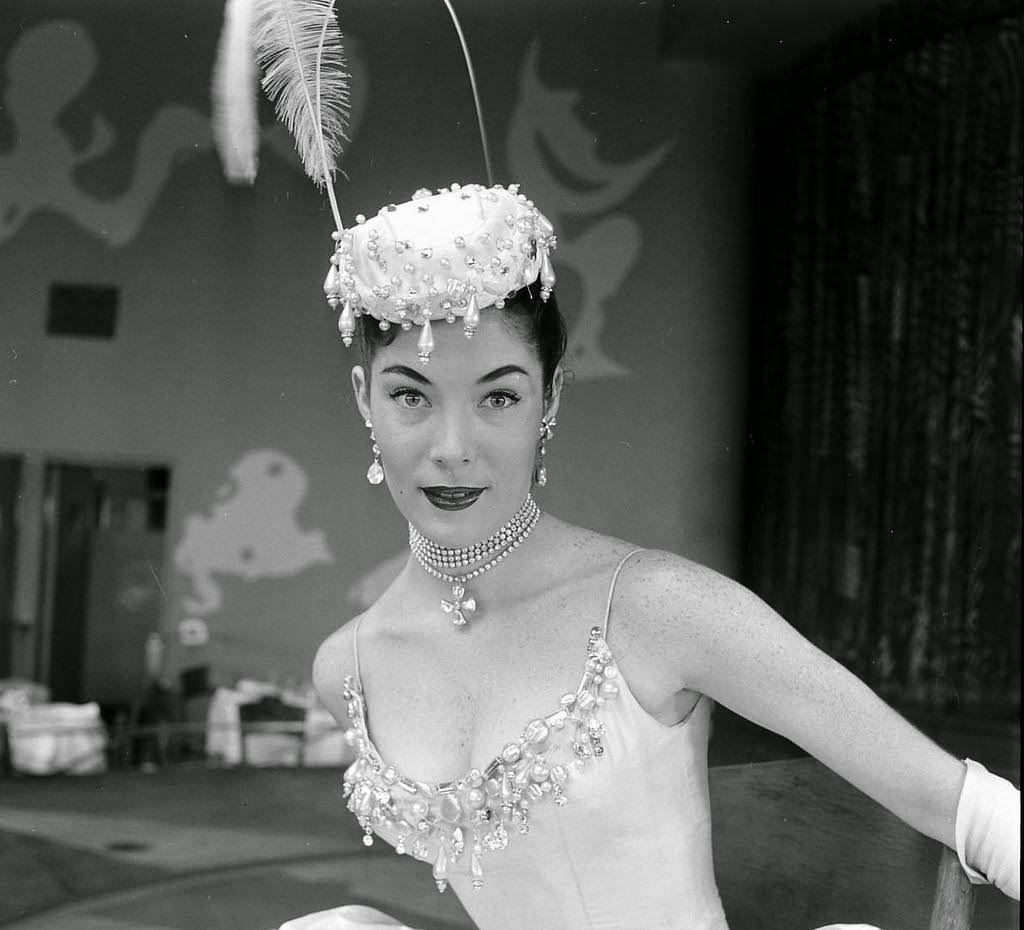
Sequins, pearls, and a single plume do most of the talking here, turning a quiet backstage moment into pure Las Vegas promise. A Riviera chorus girl poses with the practiced ease of a professional, her beaded bodice catching the light while her layered necklace and drop earrings add to the showroom sparkle. Even without the music, the styling signals the era’s taste for polished glamour—an onstage fantasy built from careful tailoring, bright embellishment, and confidence held in the shoulders.
Off to the side, the soft clutter of a working space hints at what audiences rarely considered: sets waiting in the wings, costumes between fittings, and performers moving through routines that demanded stamina as much as poise. The title places us in 1952, when the Strip’s entertainment was becoming a calling card for the city, and chorus lines helped sell the idea of modern nightlife to visitors arriving hungry for spectacle. In that context, a portrait like this becomes more than a pretty look—it’s a small document of labor, rehearsal, and the machinery behind the glitter.
For readers drawn to fashion history and mid-century culture, this photograph offers a crisp reference point for 1950s stagewear, beauty standards, and the visual language of showgirl glamour. The clean lines of the costume, the jeweled headpiece, and the deliberate pose reflect how performers were styled to read instantly from the back of a room, yet still appear effortless up close. Riviera chorus girls, Las Vegas, 1952, invites a second glance at the people who made the nightlife legend feel real—one routine, one costume change, and one perfectly set feather at a time.