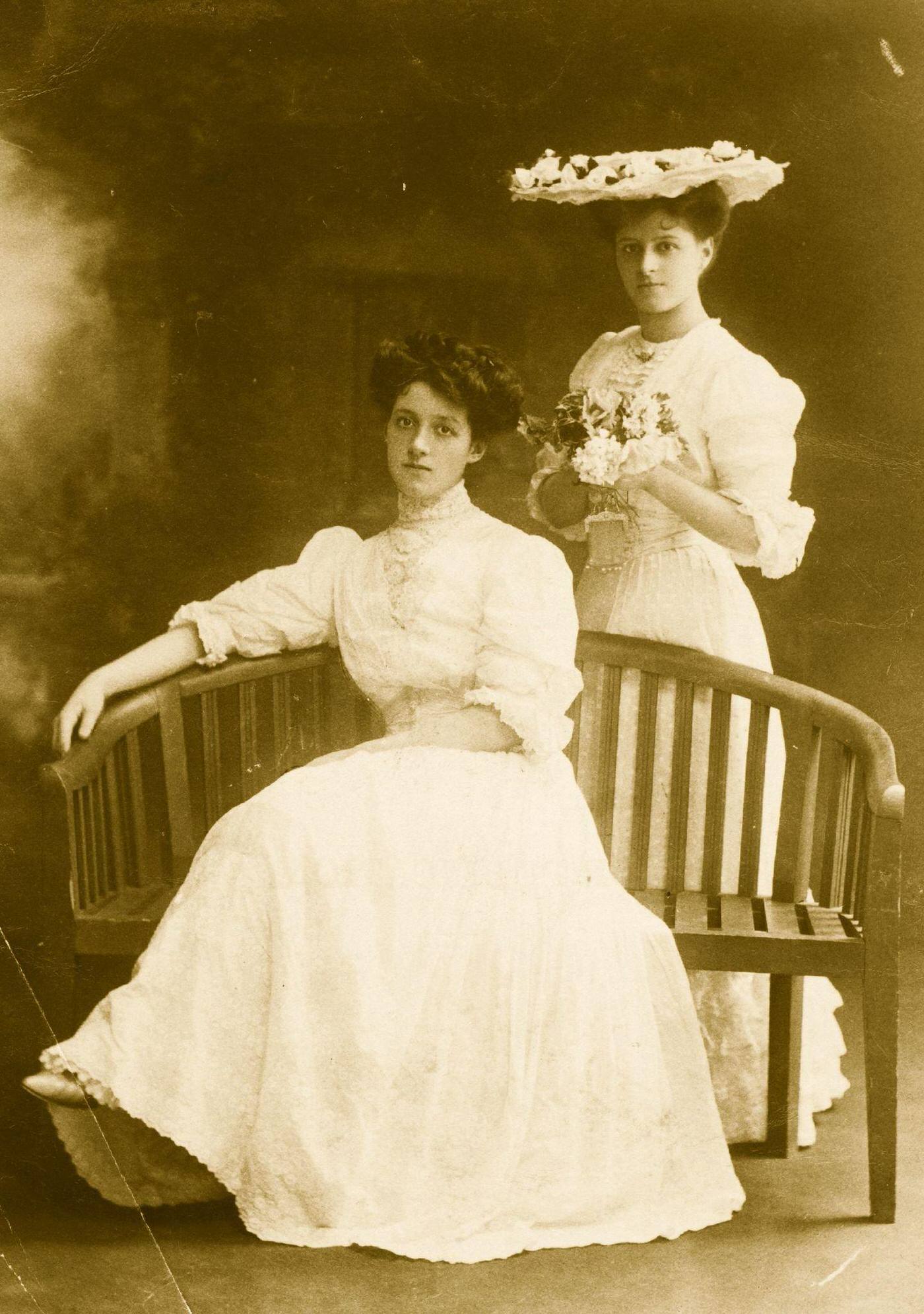
Light summer fabrics and careful posture give this Edwardian scene its quiet confidence: one lady sits along a curved wooden bench, her long day dress falling in a soft, pale sweep to the floor, while her companion stands just behind, hands gathered around a small bouquet. High lace at the throat, puffed sleeves, and a cinched waist speak to the era’s preference for modesty shaped by precise tailoring. Their composed expressions and the studio-like backdrop suggest a planned outing commemorated with a formal portrait rather than a casual snapshot.
Nothing announces the period more clearly than the hats. The standing woman’s broad, flower-trimmed picture hat frames her face like a parasol, an accessory designed as much for sun protection as for social display, while the seated woman’s smaller, darker headwear balances the look with restrained elegance. These Edwardian era hats—paired with delicate gloves and light-toned textiles—signal status, taste, and an attentiveness to fashionable silhouette, capturing the moment when millinery reached theatrical heights before styles began to simplify.
Beyond clothing, the photograph offers a glimpse into leisure and companionship at the turn of the twentieth century, when a “day out” could still be staged with the polish of a calling-card portrait. The bench, bouquet, and carefully arranged bodies create a narrative of friendship and respectability, with fashion acting as a kind of language—lace, brim, and bodice speaking of propriety, comfort, and seasonal pleasure. For readers interested in Edwardian women’s fashion, summer day dresses, and the cultural meaning of hats, this image preserves an era’s ideals in fabric and form.