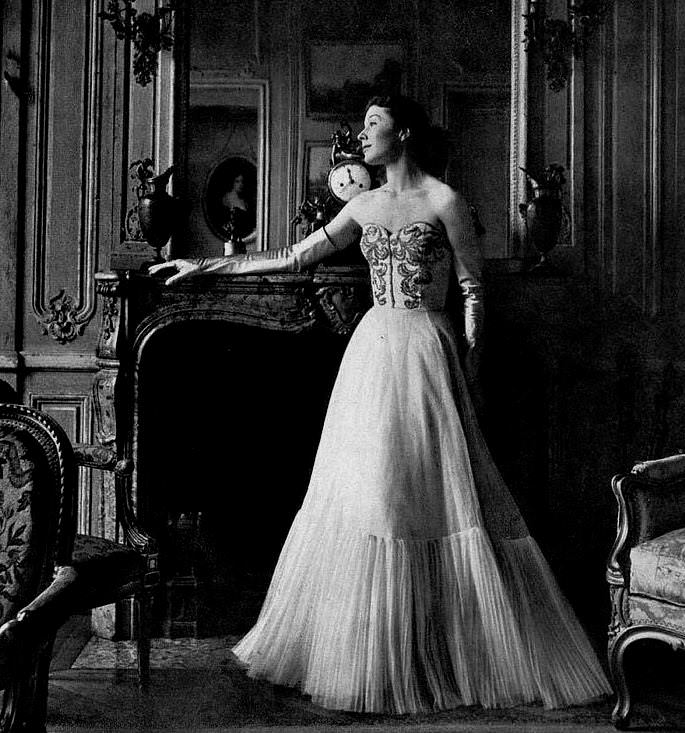
Framed by ornate wall panels and a mantel crowded with decorative objects, Bettina Graziani stands in poised profile, one gloved arm extended as if to steady herself on the edge of the room’s grandeur. The setting feels like a private salon—intimate yet formal—where a timepiece and small portrait silently echo the rituals of high society. Her lifted chin and distant gaze give the moment a theatrical calm, as though she has paused between conversation and an entrance.
A strapless evening dress of white tulle dominates the scene, its airy skirt falling in soft volume before finishing in a finely pleated flounce that catches the light in rippling bands. Across the bodice, gold embroidery forms an ornate pattern that reads like couture filigree, turning the torso into the focal point while the tulle below remains ethereal and weightless. Long opera gloves reinforce the disciplined elegance of mid-century formalwear, balancing delicacy with a sculpted, almost architectural silhouette.
Fashion historians often point to images like this when describing the rise of the modern supermodel: not merely a mannequin for clothing, but a performer who animates luxury with posture, expression, and controlled movement. The photograph’s interplay of soft fabric, gilded detailing, and richly furnished interior creates an aspirational narrative that still resonates in searches for classic French couture, evening gowns, and vintage fashion culture. In a single composed pose, glamour becomes both garment and atmosphere—an era distilled into tulle, gold thread, and quiet confidence.