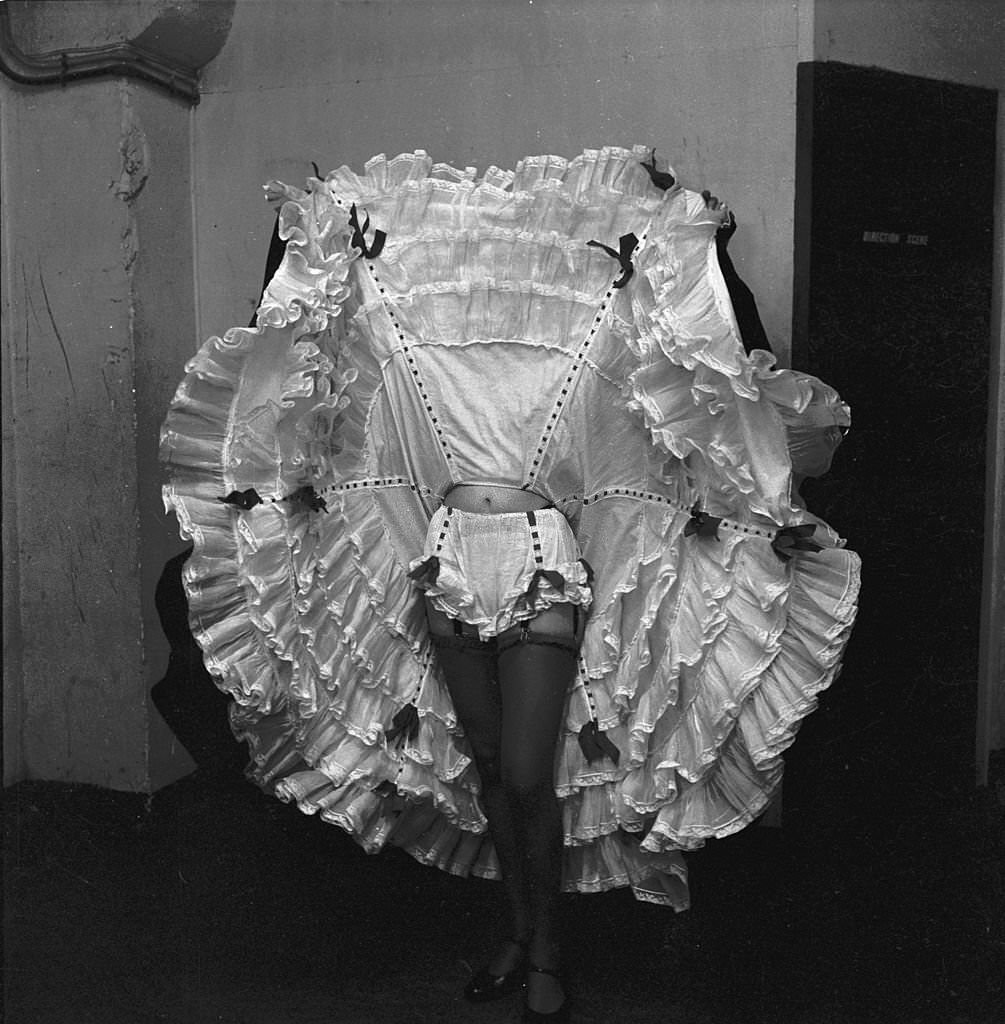
A burst of ruffles fills the frame as a cancan dancer lifts a wide, tiered skirt like a curtain, turning costume into spectacle. The satin and lace catch the light in bright, rippling layers, while garters, stockings, and the clean line of the legs take center stage—exactly the teasing, kinetic reveal audiences expected from the cancan. The figure’s face disappears behind the fan of fabric, letting the choreography of textiles and movement speak for itself.
Dated to 1955, the photograph hints at the backstage world of mid-century nightlife, where “French cancan” style remained a potent symbol of cabaret glamour. The dancer’s outfit—frilled petticoats, black ribbon accents, and neatly tailored underlayers—shows how carefully engineered these ensembles were for high kicks, splits, and fast turns. Even in a still image, the pose suggests exertion and precision, a reminder that the cancan was as physically demanding as it was flirtatious.
Set against plain walls and a shadowy corridor, the scene feels less like a polished stage performance and more like an unguarded moment between numbers. That contrast makes the cultural history sharper: entertainment built on illusion, supported by hard work and meticulous costume craft. For readers searching fashion and culture in 1950s dance photography, this image offers an intimate look at how cancan costuming framed the body, celebrated motion, and sold a very particular kind of modern excitement.