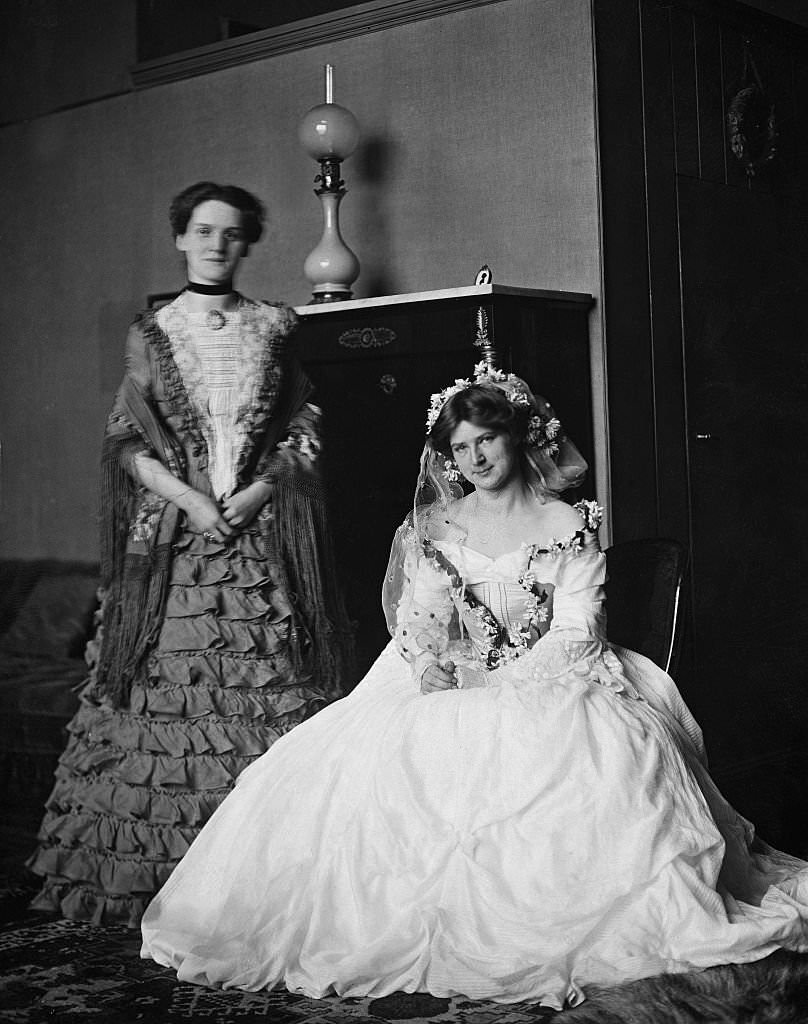
Elegantly staged indoors, two women pose in elaborate 19th‑century-inspired dress for the Crinoline festival of the Berlin Secession. One sits in a sweeping, dome-shaped gown whose breadth dominates the foreground, while the other stands beside her in a darker, tiered skirt and shawl, hands calmly folded. Their composed expressions and deliberate posture suggest a costumed tableau meant as much for performance as for remembrance.
Details of fabric and trim reward close attention: ruffles cascade in horizontal bands, a high collar frames the neck, and the seated woman’s bodice is accented with delicate floral decoration. A veil and wreath-like headpiece add a ceremonial note, reinforcing the period fantasy associated with crinoline fashion. Behind them, simple interior furnishings—most notably a tall lamp perched on a cabinet—provide a restrained domestic backdrop that lets the costumes command the scene.
Such festival imagery speaks to more than clothing; it reflects how art circles and cultural societies revived historical styles to craft atmosphere, identity, and spectacle. The Berlin Secession context hints at a milieu where modern ideas could coexist with playful historicism, using dress to evoke a curated past. For historians of fashion and culture, the photograph offers a vivid study of crinolines, social display, and the theatrical pleasure of stepping into another century.