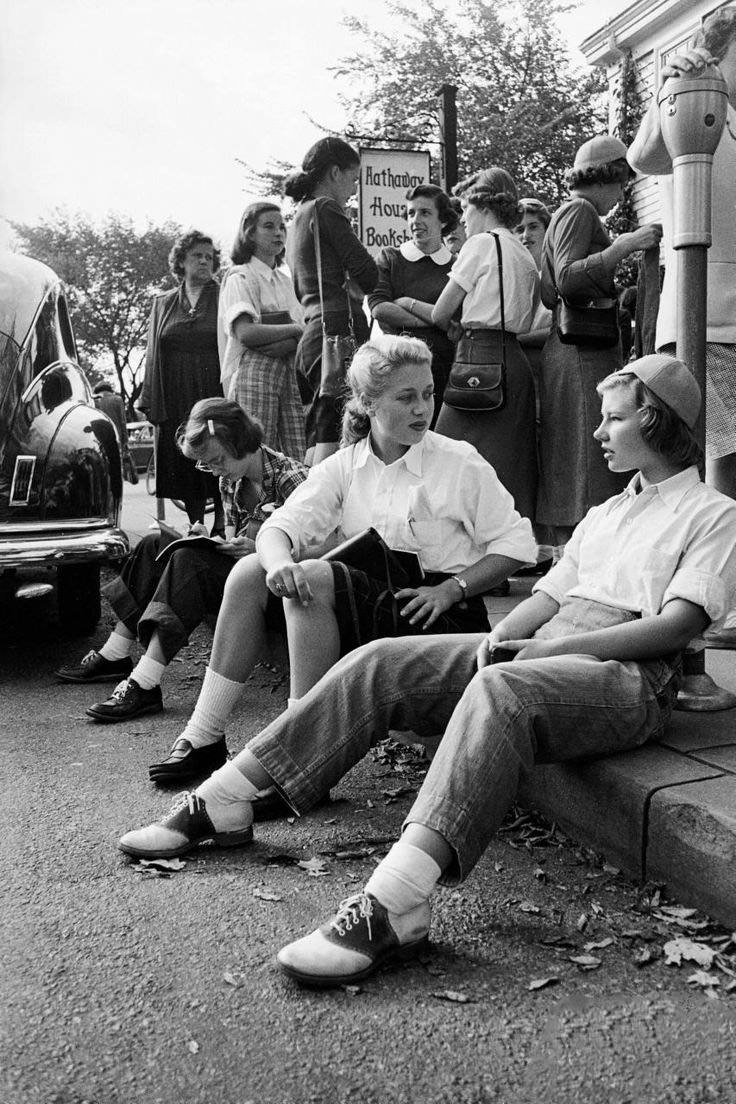
Afternoon light falls across a curbside gathering where young women lounge, talk, and scribble notes while others cluster behind them near a storefront sign. The street feels busy but unhurried—parked cars at the edge of the frame, a meter and brick wall to the right, and leaves scattered underfoot suggesting a mild day. In the foreground, two friends sit close in rolled jeans and crisp shirts, their relaxed posture giving the scene the candid, lived-in quality of everyday life.
What stands out immediately are the saddle shoes: sturdy, two-tone classics paired with bright socks, built for walking and made to be seen. Their simple design reads clearly even in grayscale—contrasting panels, clean laces, and a practical sole—an iconic look that bridged school corridors, city sidewalks, and weekend errands. Here the footwear isn’t posed or precious; it’s worn and worked into outfits that balance comfort with a neat, youthful polish.
Scenes like this help explain why saddle shoes reached peak popularity as a symbol of modern casual style for women and girls. They harmonized with sportswear-inspired dressing—rolled cuffs, easy blouses, and the kind of mix-and-match practicality that defined a new confidence in public space. For fashion and culture historians, the charm lies in the details: the way a dependable pair of shoes could signal belonging, activity, and a quietly stylish readiness to go wherever the day led.