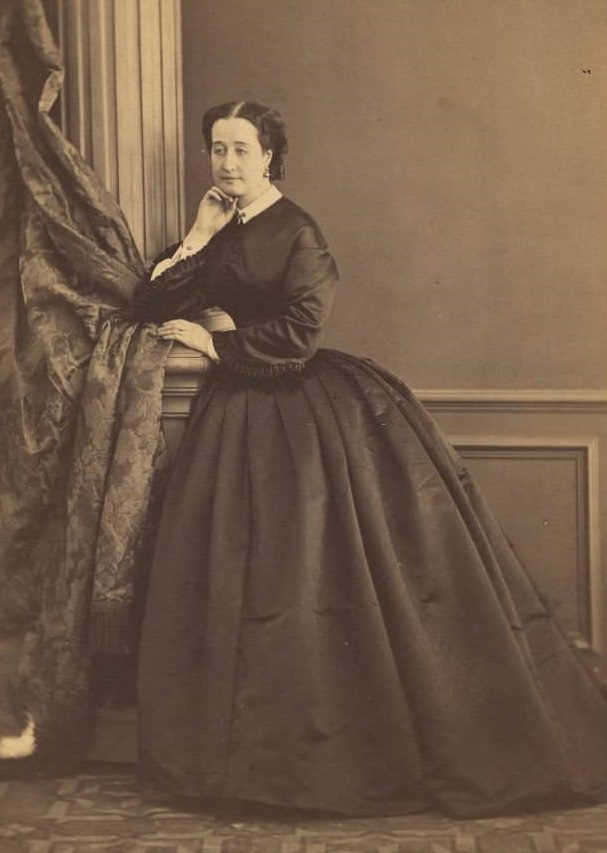
Poised beside a draped column, Empress Eugénie appears in a formal studio portrait dated 1860, her calm expression and composed posture lending the scene a quiet authority. The setting is spare—paneled wall, patterned floor, and heavy fabric arranged like stage scenery—so the eye returns again and again to the sitter and the careful construction of her silhouette. With one hand resting near her chin and the other at her waist, she embodies the controlled elegance expected of imperial representation.
Dominating the frame is the unmistakable crinoline fashion of the mid-19th century, the skirt swelling outward into a dramatic bell shape that defines the era’s ideal of femininity. A fitted bodice, long sleeves, and dark, lustrous fabric emphasize contrast between restraint above and volume below, while subtle trimming at the cuffs and neckline signals refinement rather than excess. This is courtly dress as architecture: engineered structure, polished surfaces, and a measured display of wealth.
Beyond a record of an individual, the photograph works as a window into fashion and culture at the height of crinoline popularity, when clothing communicated status as powerfully as any title. Studio portraits like this one helped circulate style cues, turning elite wardrobes into visual reference points for a wider public fascinated by imperial taste. For historians and collectors of Victorian and Second Empire aesthetics, “Empress Eugénie, 1860” remains an enduring image of 19th-century women’s dress, etiquette, and the visual language of prestige.