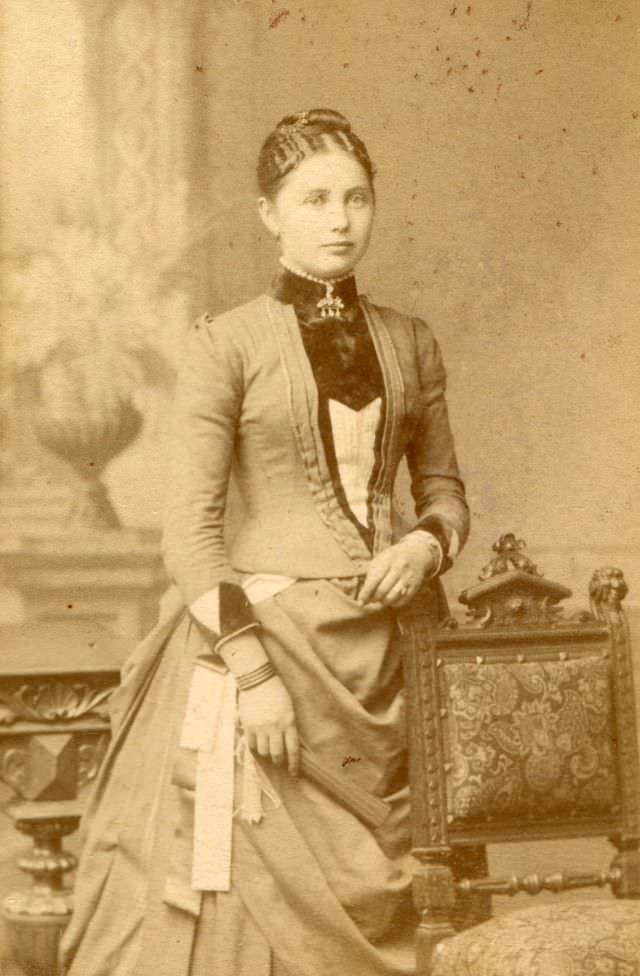
Poised beside an ornate studio chair, a Victorian woman faces the camera with a steady, practiced calm, her hair swept up and neatly dressed. The sepia tones soften the scene, but the silhouette remains unmistakable: a long skirt, fitted bodice, and high collar arranged for maximum decorum. Even without a visible corset, the era’s signature hourglass line is clearly implied through the structured layers of her clothing.
In late 19th-century fashion, the corset functioned as an indispensable foundation garment, shaping posture as much as waistline and determining how outer garments would drape. The tailored jacket and dark, high-necked insert emphasize vertical lines, while the carefully pinned front and crisp cuffs suggest the disciplined elegance expected in formal portraits. Such photographs were as much about respectability and social presentation as they were about style, preserving an ideal of femininity built on control, symmetry, and restraint.
Details around her—painted studio backdrop, carved furniture, and the deliberate placement of hands—echo the conventions of Victorian portrait photography, where every element supported a composed narrative. For modern viewers searching Victorian corset fashion, 19th-century women’s clothing, or historical undergarments, the image offers a quiet lesson in how unseen garments shaped what the public saw. It’s a reminder that the “tight corset” was not merely a curiosity, but a central technology of dress that influenced movement, identity, and the visual language of an age.