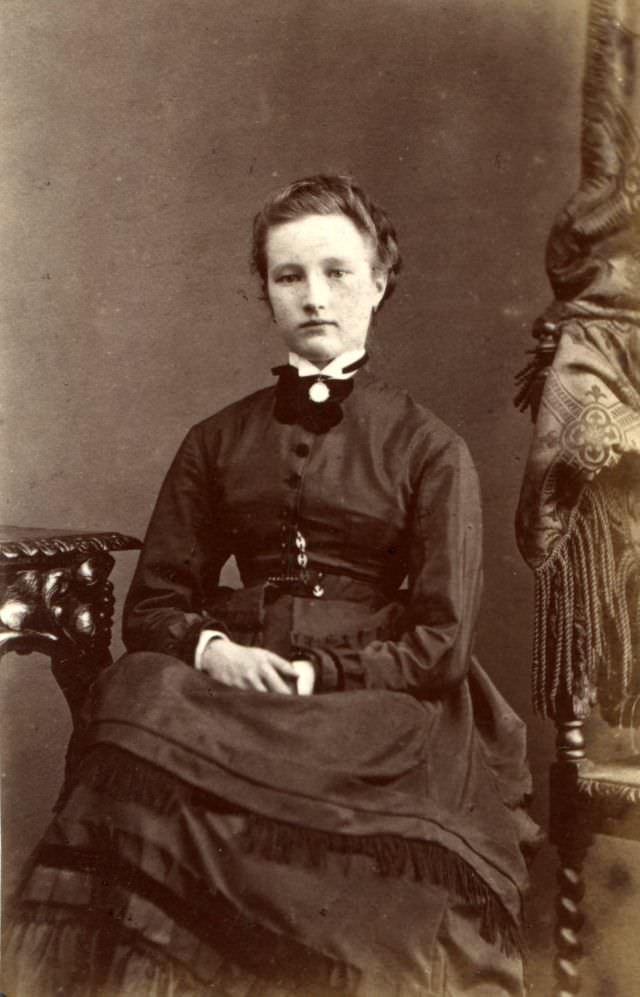
Poised in a studio setting, a young Victorian-era woman sits with a steady, unsmiling composure, her dark dress buttoned high at the throat and finished with a neat bow and brooch. The silhouette is unmistakably late 19th century: narrow at the waist, structured through the torso, and softened below by layered skirts that fall in heavy folds. A carved chair arm and a draped patterned textile at the edge of the frame hint at the photographer’s carefully arranged interior, meant to lend refinement and respectability to the sitter.
The corset’s influence is visible even when it remains hidden, shaping the bodice into the fashionable line of the day and supporting the upright posture that Victorian portraiture so often prized. Details like fitted sleeves, a smooth front closure, and crisp collar points speak to the era’s devotion to disciplined tailoring and controlled elegance. For many women, such undergarments were considered indispensable—tools of style, status, and self-presentation—while also reflecting the constraints and expectations placed on the female body.
Viewed today, the photograph offers more than a record of clothing; it opens a window onto Victorian fashion culture and the lived experience behind it. The sitter’s calm gaze and composed hands suggest a moment of stillness amid an age that valued decorum, modesty, and carefully curated appearances. As a piece of antique portrait photography, it remains a compelling reminder of how late 19th-century corsets and dressmaking shaped not only wardrobes, but also the way women were seen and remembered.