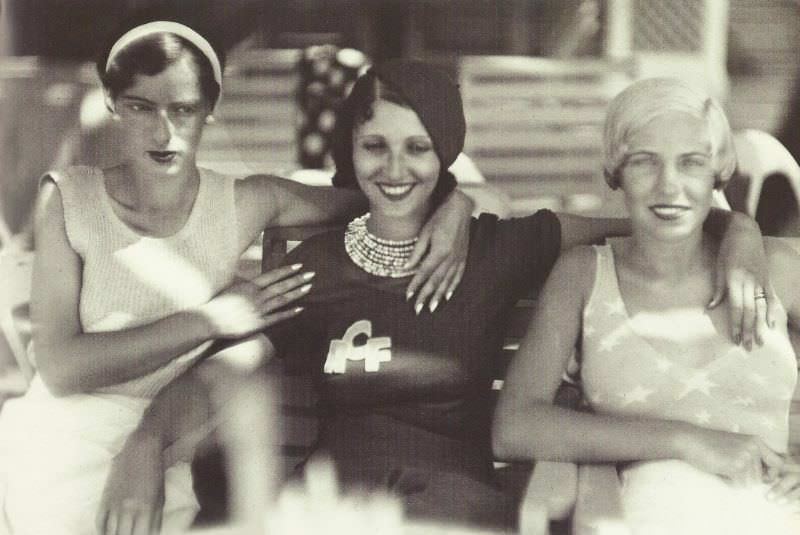
Three young women lounge close together on a bench, their arms draped with an ease that feels more personal than posed. The central figure—smiling broadly—wears a dark dress set off by a bold, layered necklace, while her companions frame her in light-toned sleeveless outfits and sleek, cropped hairstyles. Behind them, soft blur and bright outdoor light suggest a casual terrace or garden setting, the kind of everyday backdrop where fashion looks lived-in rather than staged.
The title’s focus on Renée Perle and an intimate love story fits the photograph’s candid warmth: a moment of camaraderie, confidence, and modern femininity. Details like the cloche-like headwear, sharply defined brows, and understated yet deliberate styling evoke interwar-era fashion culture, when models and muses helped translate couture ideals into recognizable attitudes. Even without a named location, the image reads as distinctly European in mood—cosmopolitan, relaxed, and attentive to silhouette and accessories.
For readers searching fashion history, Romanian model Renée Perle, or vintage style inspiration, the photo offers a compact lesson in how intimacy and image-making overlapped. It isn’t just about garments; it’s about proximity, gaze, and the social world that surrounded early twentieth-century modeling. In that mix of friendship, performance, and quiet glamour, the scene preserves a small but telling chapter of Fashion & Culture.