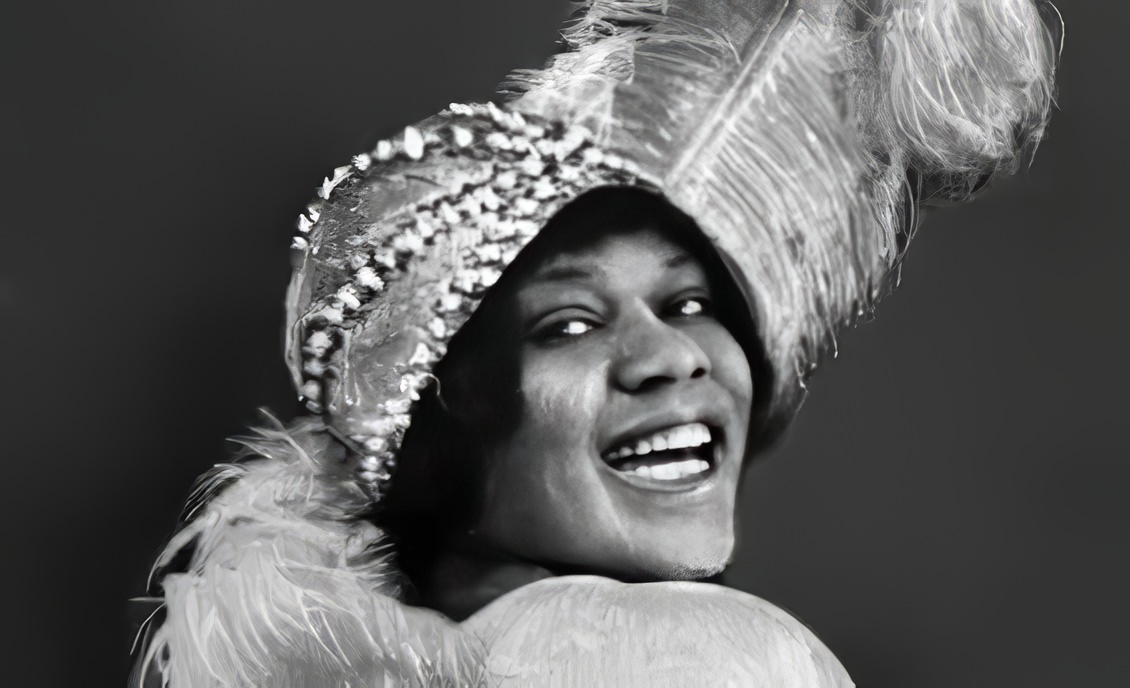
A wide, radiant smile fills the frame as a glamorous performer turns slightly toward the camera, caught in a moment that feels both staged and wonderfully alive. The elaborate headpiece—dense with sequins and crowned by a tall spray of feathers—signals the world of cabarets and traveling shows, where costume and charisma had to read instantly from the back row. Soft feathers at the shoulders add to the sense of motion and spectacle, turning the portrait into a celebration of stage presence.
Bessie Smith began singing in minstrel shows and cabarets in 1912, and the image’s theatrical styling echoes that early proving ground where singers learned to command a room. Those circuits demanded stamina, humor, and a voice strong enough to cut through crowded halls, and performers often relied on bold wardrobe choices to match their musical power. Even without a visible stage, the confident pose and luminous expression suggest a seasoned entertainer accustomed to applause, lights, and the sharp pace of live performance.
Glamour and rebellion thread through the era’s fashion, and this portrait fits neatly into the story of 1920s style—feathers, sparkle, and unapologetic flair that pushed against older expectations. For readers searching the history of jazz-age culture, early blues performance, and vintage showgirl aesthetics, the photo offers a vivid window into how music and image worked together to build fame. It’s not just a costume; it’s a statement about modernity, artistry, and the hard-won freedom of the stage.