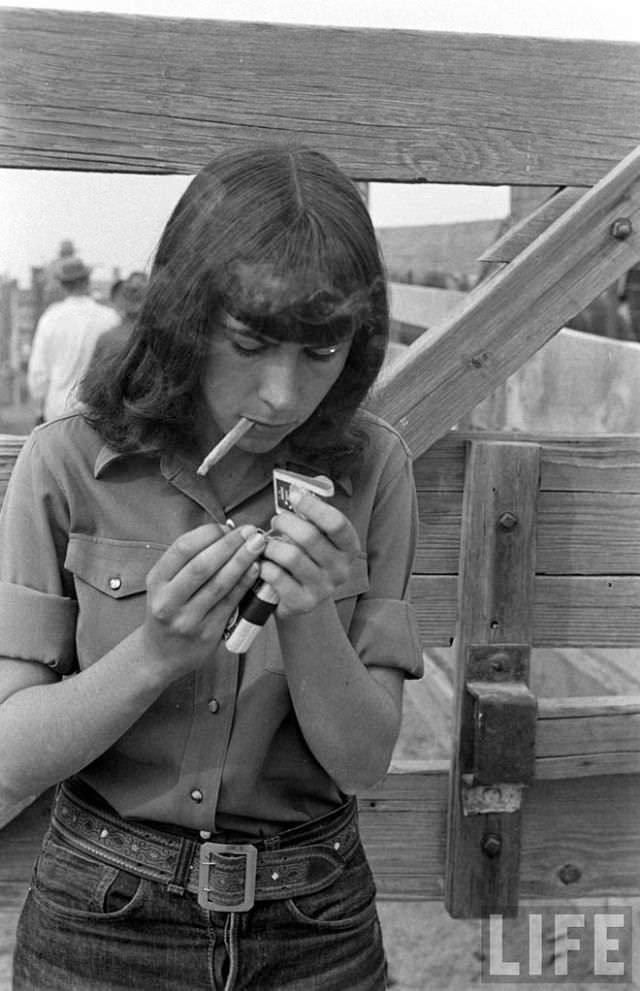
Leaning against rough-cut corral boards, a young ranch woman concentrates on the small ritual of lighting a cigarette, her posture relaxed but self-possessed. The setting feels practical and workaday—wooden rails, open air, and the blurred suggestion of other figures nearby—far from the polished soundstage myths that defined “cowgirl” for movie audiences. It’s an unguarded moment that hints at long hours, dust, and the steady pace of life around livestock and fences.
Her clothing tells its own story about 1940s American cowgirl fashion and culture: a sturdy short-sleeve button-up work shirt, a wide tooled leather belt with a substantial buckle, and hard-wearing jeans built for riding and chores rather than applause. Nothing here looks costume-like or overly decorative; instead, the style reads as functional Western wear shaped by necessity, climate, and labor. Details like rolled sleeves and the fit of the shirt evoke a working wardrobe that still carries a quiet sense of identity and pride.
Beyond the silver screen, the authentic cowgirl experience was defined by competence and endurance as much as any romance of the range. Photos like this invite a closer look at everyday Western life—how women balanced work, self-presentation, and community in rural spaces where practicality came first. For readers interested in vintage Americana, ranch culture, and women’s Western fashion history, this image offers a grounded glimpse into the lived reality behind the legend.