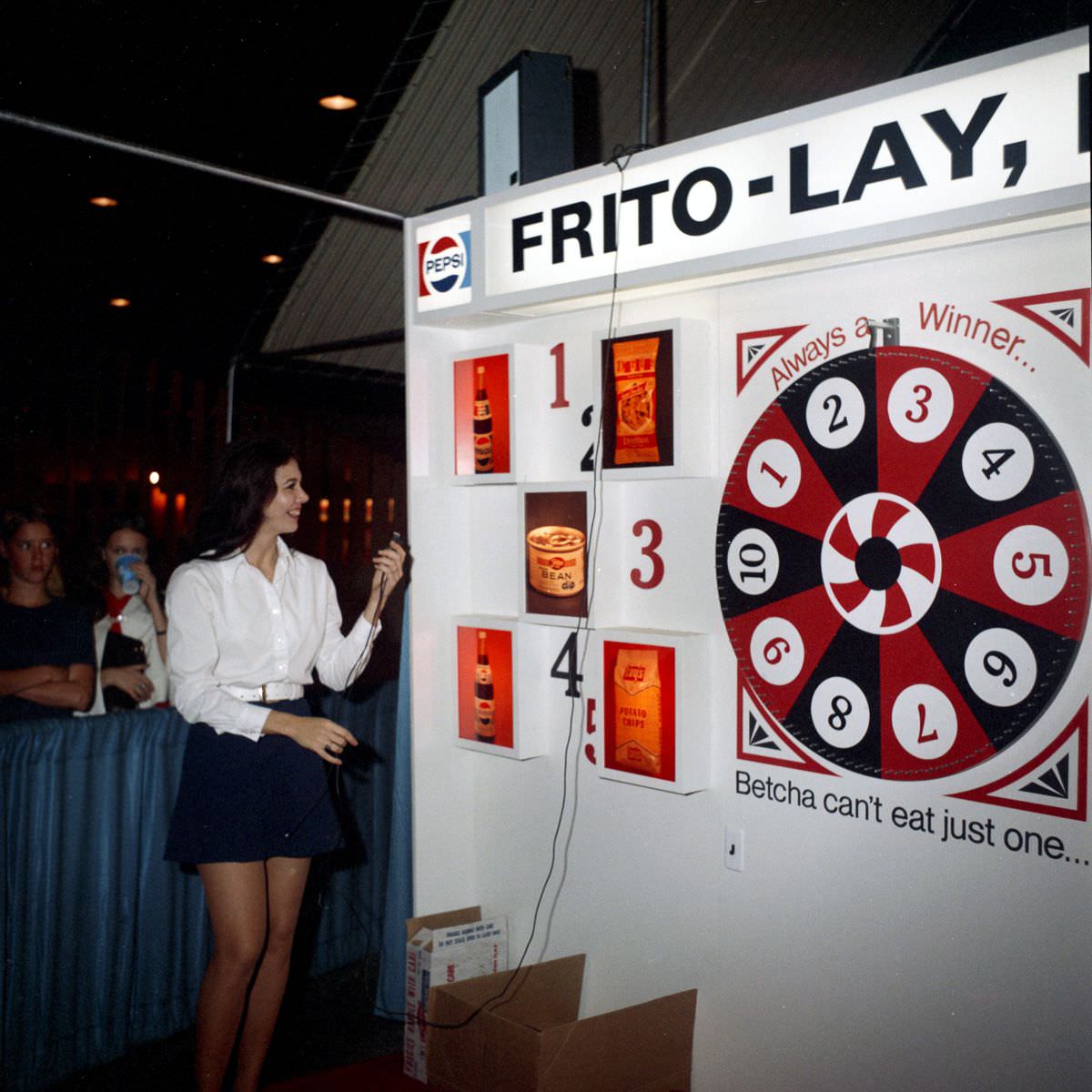
Beneath a bold FRITO-LAY sign and a Pepsi logo, a smiling young woman stands at a fairground-style game display, microphone in hand, poised as if announcing a winner. A large numbered wheel dominates the right side, ringed with red-and-black segments and familiar snack-brand slogans, while product images and oversized digits fill the panel to her left. In the dim background, spectators linger behind a barrier, their attention split between the presenter and the bright, promotional spectacle.
Her outfit—crisp white blouse tucked into a dark skirt with a wide belt—channels early-1970s pageant and event fashion: polished, approachable, and camera-ready. The scene feels like a crossover between beauty pageant ceremony and trade-show marketing, where poise and presentation mattered as much as the prize. Even without a crown in frame, the staging echoes the performative rituals of fair competitions: smiles held, cues taken, and crowd reactions managed in real time.
Tied to the Texas State Fair and the “Miss Pecan Nuts” theme in the title, the photo highlights how corporate sponsorship and regional identity blended seamlessly in 1972 fair culture. Brands used wheels, giveaways, and stage patter to turn everyday snacks into entertainment, while pageant imagery lent glamour and legitimacy to promotional events. For anyone researching Texas State Fair history, 1970s beauty pageants, or vintage American advertising, this moment offers a vivid snapshot of fashion, marketing, and crowd-pleasing theater under one roof.