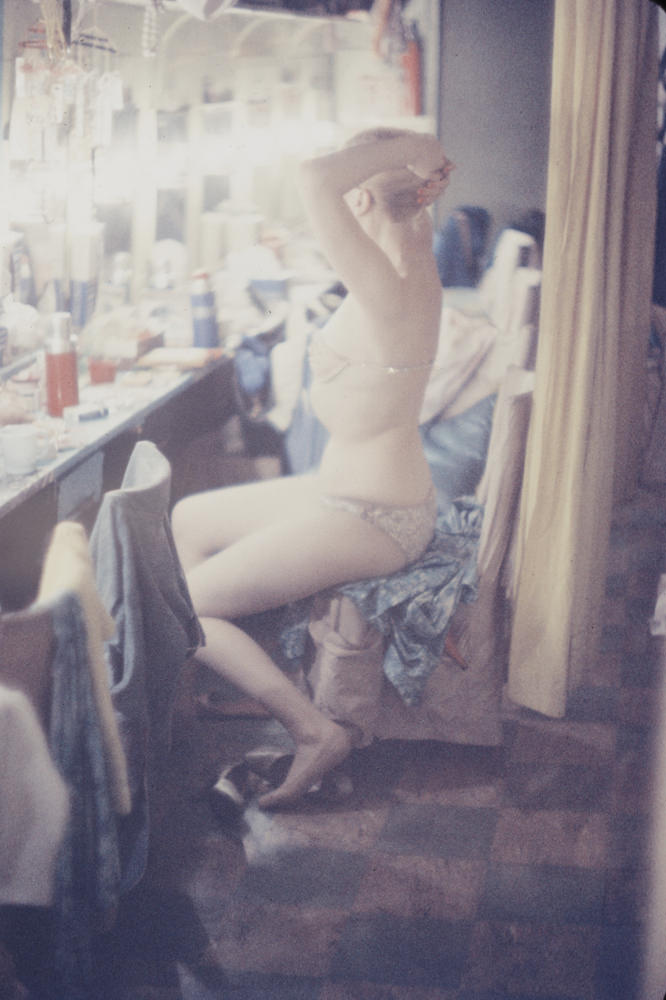
Backstage, the glamour of a 1958 New York nightclub is stripped down to its working parts: a performer perched at a crowded dressing table, arms raised as she fixes her hair beneath the hot spill of mirror lights. Cosmetics, bottles, and brushed-metal clutter line the vanity, while costumes and fabric spill over chairs in the cramped room. The scene feels intimate and unguarded, a rare glimpse into the quiet moments that made the spotlight possible.
What reads as sparkle from the audience becomes routine up close—tight schedules, quick changes, and the discipline of maintaining a polished look night after night. The performer’s posture suggests both focus and fatigue, caught between rehearsal and showtime in a space built for speed rather than comfort. It’s a reminder that the famed midcentury nightclub spectacle depended on real labor: makeup applied in haste, hair pinned with practiced hands, and bodies trained to move as one under stage cues.
For anyone drawn to fashion and culture, this photo offers rich texture: lingerie-like stagewear, the soft blur of color film, and the utilitarian backstage environment that framed New York’s nightlife mythology. The title’s promise of “glitter and grit” lands here in a single frame—beauty assembled in plain view, surrounded by the everyday mess of performance work. Seen today, it reads less like fantasy and more like history you can almost hear: footsteps in the corridor, a muffled band warming up, and the mirror bulbs buzzing as the night begins.