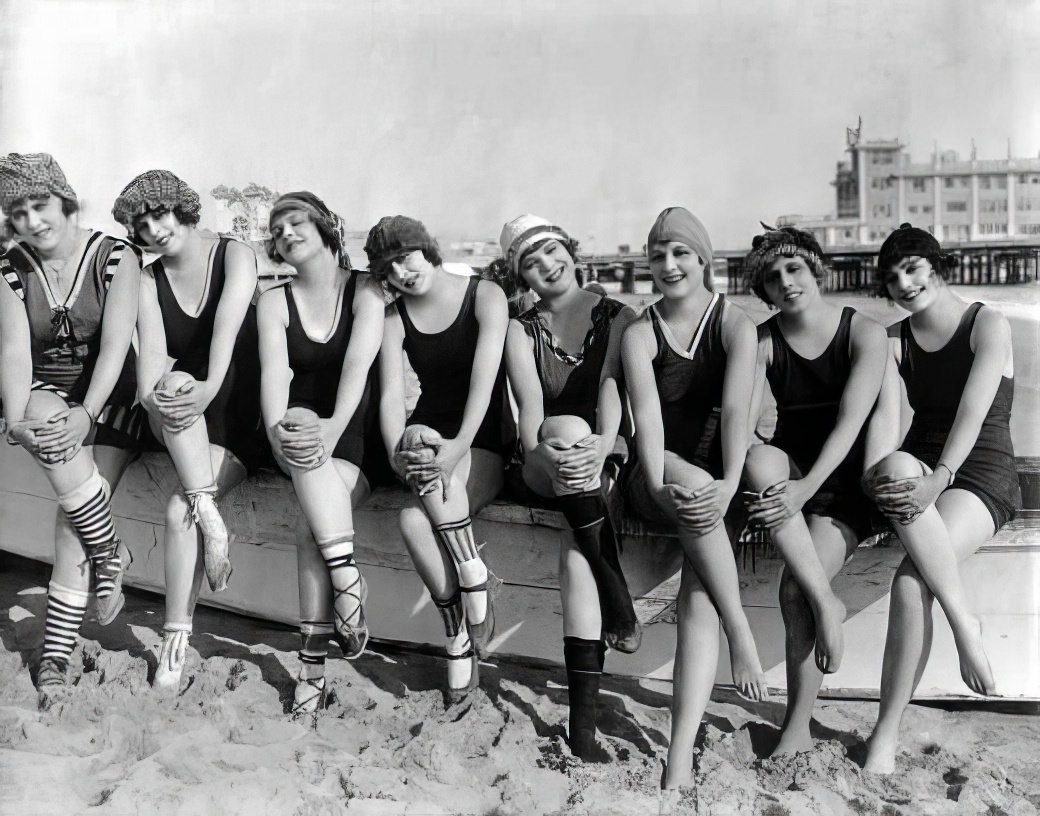
A line of young women sits shoulder to shoulder on the sand, knees drawn up and arms looped around their legs in a relaxed, choreographed pose that feels equal parts seaside outing and studio publicity. Their dark, sleeveless bathing costumes create a striking rhythm across the frame, softened by playful variations—striped suits at the edge, lace-up footwear, and the distinctive swim caps and curled head coverings that mark early Hollywood’s idea of sporty chic. Smiles and tilted heads do much of the work here, selling a mood of carefree confidence meant to read clearly even in monochrome.
Behind them, a pier and large waterfront building anchor the scene in the modern leisure landscape that helped define screen-era glamour: beaches as stages, not just escapes. The composition balances sunlit sand with the architecture of entertainment, suggesting how film culture borrowed the public shoreline and turned it into a backdrop for aspiration. Even without motion, the group’s synchronized posture hints at the comedic, ensemble energy associated with the Sennett Bathing Beauties—an image built for easy recognition and wide circulation.
Fashion and culture converge in the details: modest by later standards yet daring for the mid-1910s, these swimsuits emphasize streamlined silhouettes, exposed arms, and a new casualness in women’s public dress. The styling presents athleticism as attractive and marketable, linking healthy outdoor recreation to the emerging machinery of celebrity. As a promotional-style beach photograph tied to Hollywood’s rising image economy, it captures how 1915-era glamour was manufactured through costume, camaraderie, and the carefully staged promise of modern fun.