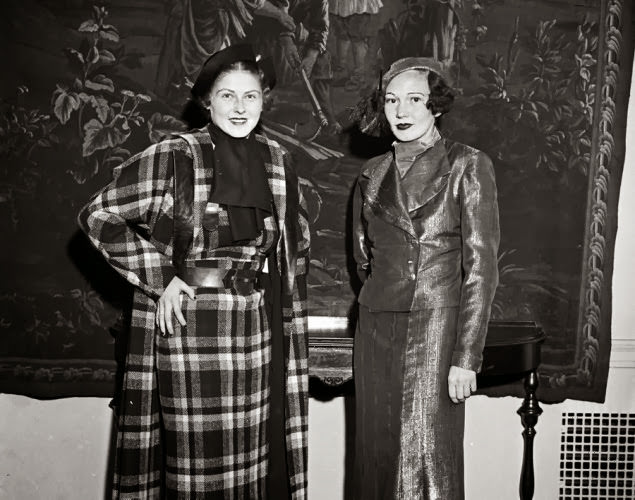
Against a painted, tapestry-like backdrop, two runway models stand poised at a 1933 fashion show, presenting the kind of tailored practicality that defined women’s suits in the early 1930s. One wears a bold plaid ensemble with a coordinated coat draped over the shoulders, cinched at the waist to emphasize a controlled, modern silhouette. The other model answers with a sleek, structured suit whose smooth sheen and sharp lapels suggest an interest in polish and authority, even in an era that often demanded restraint.
Details reward a closer look: broad shoulders, long lines, and careful seaming hint at expert tailoring and the period’s evolving approach to daywear. The contrasting textiles—graphic checks versus a luminous, almost metallic finish—create a dialogue between warmth and refinement, between the familiar and the aspirational. Hats and accessories keep the mood composed, reinforcing how fashion shows used posture and styling to sell a complete idea of contemporary femininity.
For readers interested in 1930s fashion history, this photograph offers a vivid snapshot of how women’s suiting balanced elegance with coverage, confidence, and public presence. It speaks to the decade’s fascination with clean construction, the influence of menswear-inspired tailoring, and the way models embodied new social roles through clothing. As a piece of fashion and culture, the image captures more than garments—it preserves a moment when style, display, and identity were stitched tightly together.