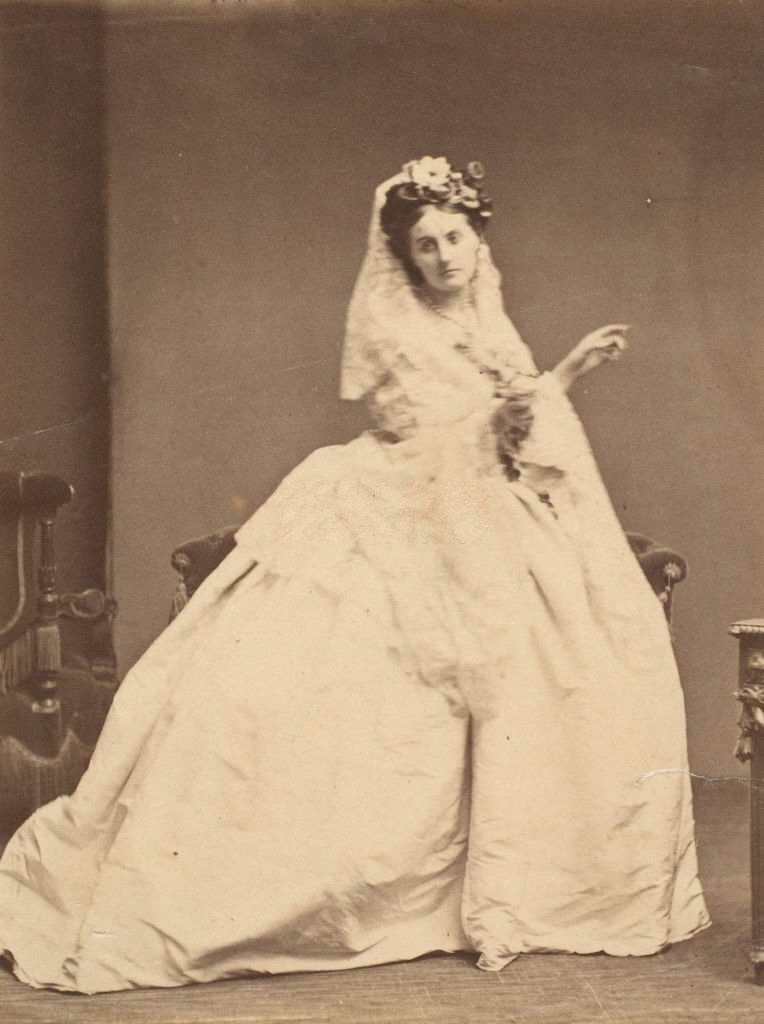
A young woman poses in full 1860s crinoline fashion, her skirt ballooning outward into a sweeping dome that dominates the studio floor. The dress’s pale fabric catches the light in broad, soft planes, while the fitted bodice and structured sleeves emphasize the era’s sharp contrast between a narrow waist and an expansive silhouette. A veil-like lace covering drapes from her hair, lending a bridal or formal, ceremonial feel without giving away any specific occasion.
Behind the elegance lies the engineering that made “puffy dresses” possible: the crinoline cage and layers of petticoats that held the fabric away from the body. The photograph quietly advertises this fashionable architecture, showing how the garment creates space around the wearer and dictates how she must stand, turn, and even gesture. Her raised hand and careful posture read as practiced, as if the dress itself sets the rules of movement for the portrait.
Studio furniture peeks in at the edges—upholstered seating and a small table—typical props that helped sitters balance during long exposures and framed the scene as respectable and refined. The plain backdrop keeps attention on texture and form: lace against smooth cloth, ornamental headwear against dark hair, the immense skirt against the bare floorboards. For anyone searching Victorian fashion history, women’s crinolines, or 19th-century dress culture, the image offers a vivid, close look at how style, status, and technology converged in the iconic silhouette of the 1860s.