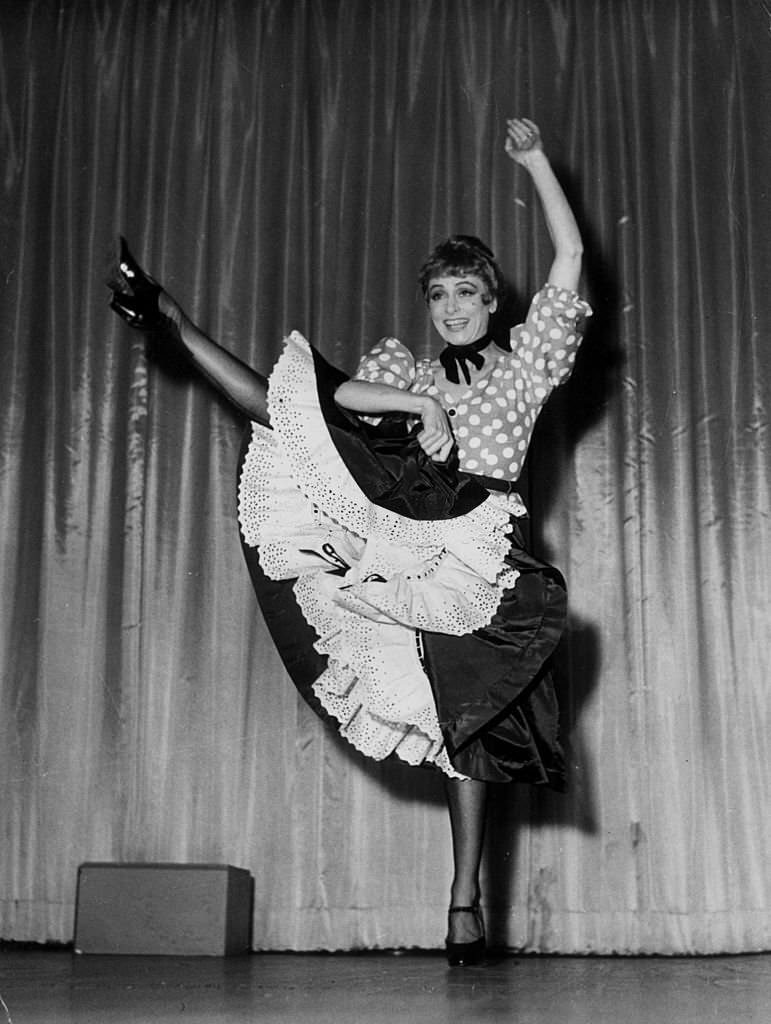
Under the heavy stage curtain, a cancan dancer hits a dazzling high kick, one arm flung upward while the other gathers a storm of ruffles at her waist. The costume’s playful polka-dot bodice, dark bow at the neck, and tiered petticoats are designed for movement, catching the light as the skirt fans outward. Stockings and heeled dance shoes complete the unmistakable cabaret silhouette, with the performer’s smile and lifted chin selling the bravura of the moment.
Paris in 1954 was hungry for spectacle and celebration, and gala evenings often leaned on the city’s most recognizable entertainments to set the mood. The cancan—athletic, flirtatious, and precisely timed—had long been a symbol of Parisian nightlife, translating bohemian cabaret traditions into polished stage acts suitable for formal audiences. In a single frozen instant, the photograph communicates both the discipline required and the carefree illusion it projects.
For the Lion’s Club gala referenced in the title, the scene suggests a curated blend of civic sociability and cultural display, where philanthropy and performance shared the same spotlight. The plain stage floor and simple backdrop keep attention on the dancer’s motion, turning the picture into a crisp record of mid-century fashion and popular entertainment. As a piece of Paris cultural history, it captures how the cancan’s energy continued to animate postwar nightlife, even in the context of organized social events.