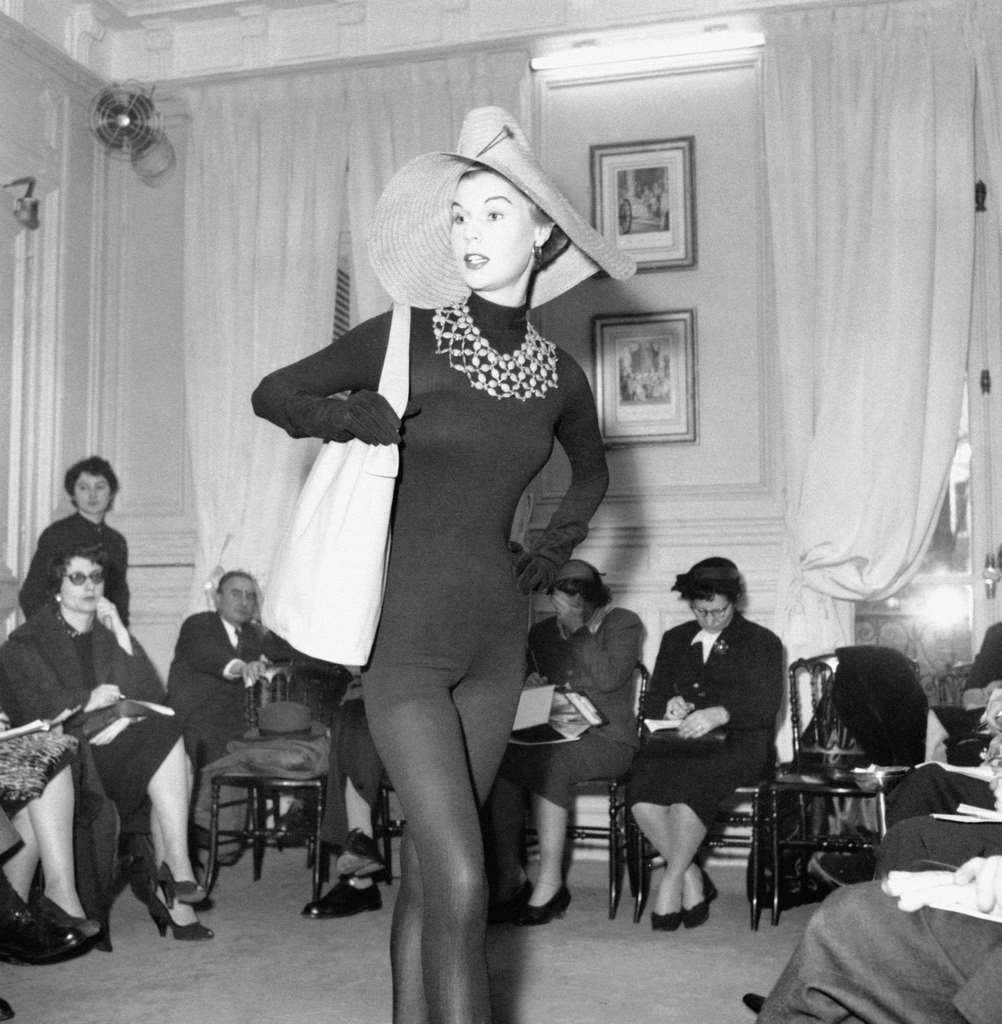
Poise and movement take center stage as a model strides through a Paris salon, her silhouette sharpened by a sleek, body-hugging look that reads like a mid-century statement in confidence. A wide-brimmed hat tilts dramatically, casting a sculptural curve around her face, while long gloves and a bold, clustered necklace add texture and sparkle. Slung over one shoulder, a large, light-toned bag is presented not as an afterthought but as a key element of the ensemble—exactly the kind of accessory-led emphasis the Jacques Fath house was known for showcasing in 1955.
Around her, an attentive audience sits close, the intimate seating and note-taking suggesting the professional rhythm of a fashion presentation: buyers, journalists, and spectators reading the details as the look passes by. The room’s curtains, framed wall art, and simple chairs evoke the private elegance of couture showings before the era of stadium runways and massive lighting rigs. Even the candid gestures—heads bent to notebooks, eyes tracking the model—underline how accessories, bags, and hats were evaluated as carefully as the clothing itself.
What lingers is the way Paris fashion culture of the 1950s elevated finishing pieces into symbols of modern taste and social ease. The oversized hat and roomy bag point toward daywear practicality filtered through high design, while the jewelry and gloves keep the message resolutely refined. As a historical fashion photograph, it offers a vivid glimpse into the Jacques Fath aesthetic: disciplined lines, theatrical accents, and the quiet power of accessories to define a whole look.