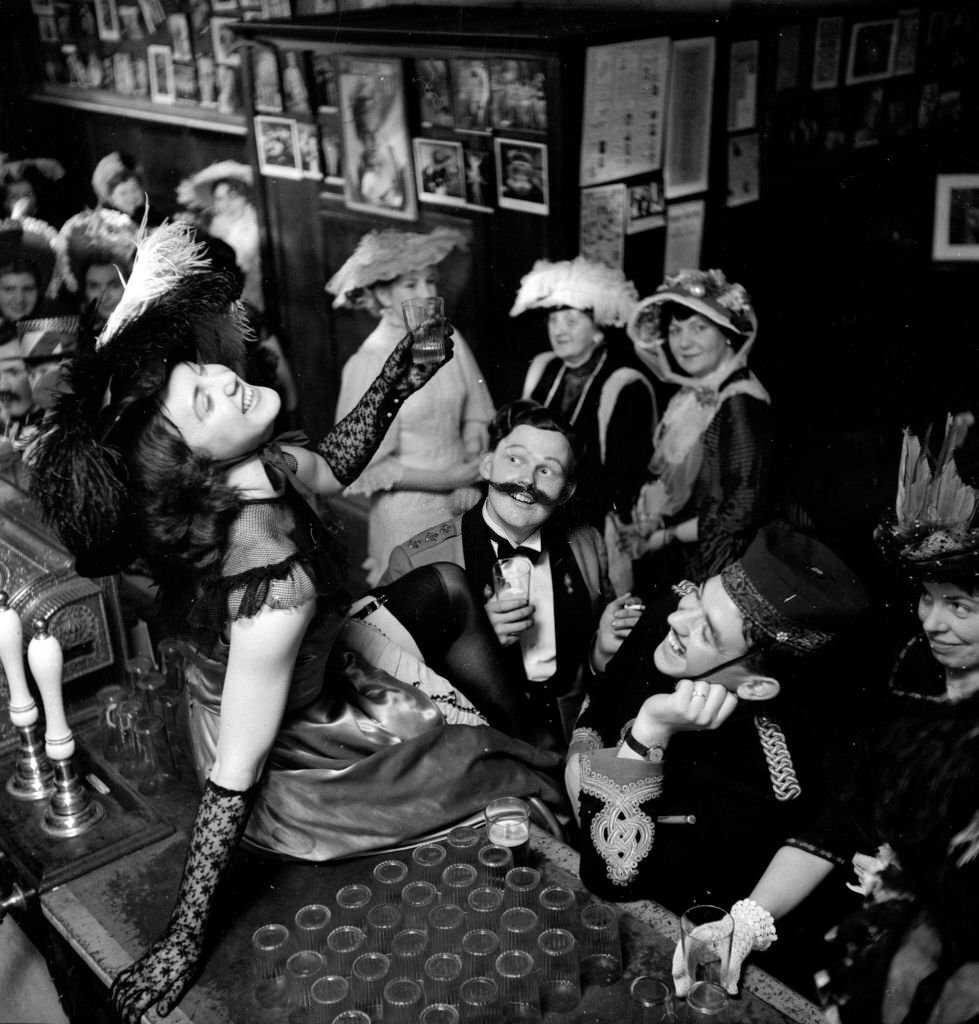
Feathered headpieces, lace gloves, and a flash of petticoats turn a crowded bar into a miniature stage as a can-can dancer leans back in mid-performance, glass raised and smile wide. The room presses in close around her, with faces tilted upward in delight and curiosity, suggesting the kind of intimate, boisterous entertainment that thrived in British music halls. Even in monochrome, the textures stand out—satiny skirts, netting, and dark wood—evoking a nightlife scene built on spectacle and proximity.
At the City Varieties Music Hall in Leeds, the atmosphere feels less like a formal theatre and more like a shared lark between performers and patrons. Men in costume-like jackets and bow ties mingle with women wearing decorative hats, as if the evening itself invited dressing up and playing a part. The bar top, crowded with small glasses and surrounded by elbows and laughter, becomes a playful platform where the boundary between audience and act all but disappears.
Behind the revelry, the walls are layered with posters and framed pictures, quiet evidence of an entertainment venue steeped in routine and tradition. The title’s date, 1953, places the moment in a post-war Britain hungry for diversion, when popular culture offered a bright counterpoint to austerity. For anyone searching mid-century nightlife, music hall history, or the enduring legend of the can-can, the photograph serves as a vivid snapshot of performance, fashion, and communal escape.