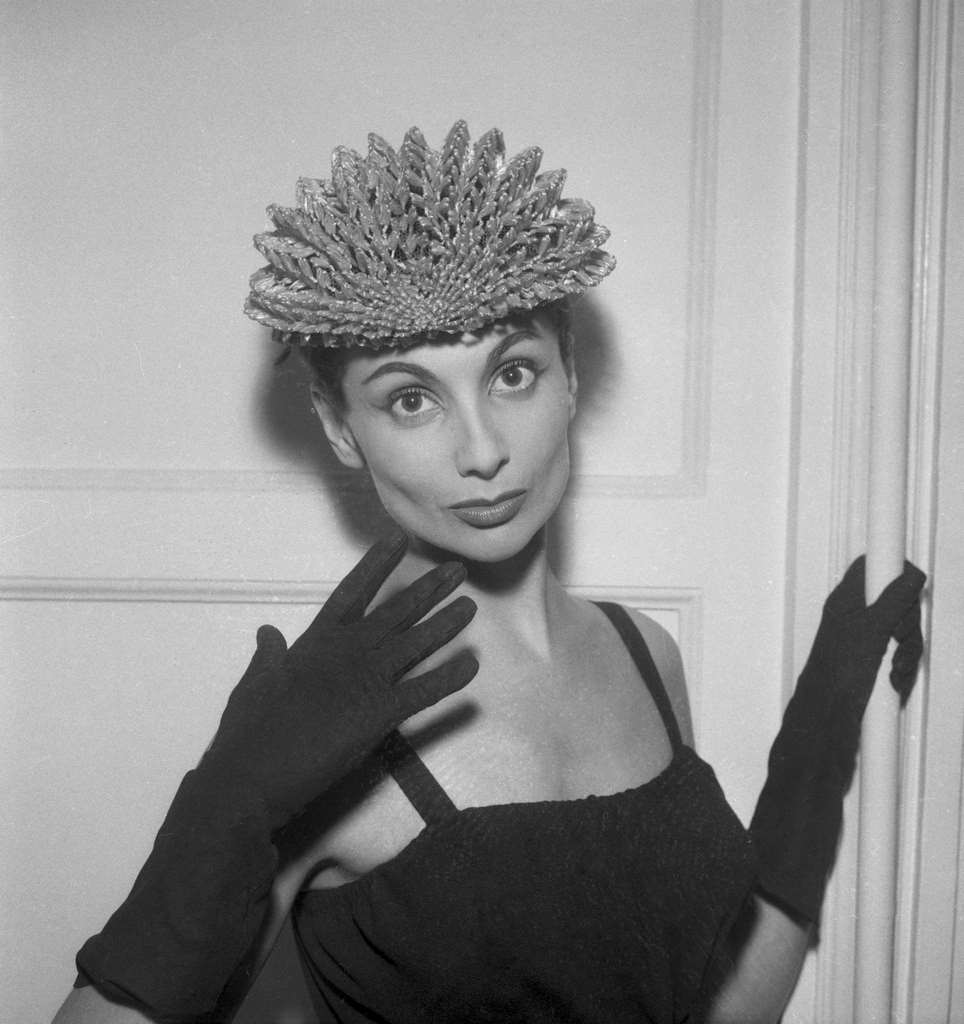
Poised against a paneled Paris interior, a fashion model meets the camera with the controlled drama of haute couture portraiture, her head tipped slightly to emphasize the sculptural spring hat. The hat’s radiating, petal-like texture forms a crown of light and shadow, while her sleek dress straps and bare neckline keep the silhouette clean and modern for 1957.
Long, dark gloves become the main punctuation of the pose: one hand lifted near the collarbone, the other braced lightly at the doorway, creating a diagonal rhythm that pulls the eye through the frame. The photographer’s lighting is crisp and flattering, sharpening cheekbones and highlighting the hat’s intricate surface so the accessories read as both craftsmanship and statement.
Titled as a presentation of a Jacques Fath model with spring hat and gloves in Paris on January 28, 1957, the image speaks to postwar French fashion culture at its most refined—where millinery, gloves, and attitude carried as much meaning as the dress itself. It’s a small stage set for a larger story: the couture house’s emphasis on elegance, the seasonal ritual of new looks, and the enduring Parisian ideal of polished, theatrical restraint.