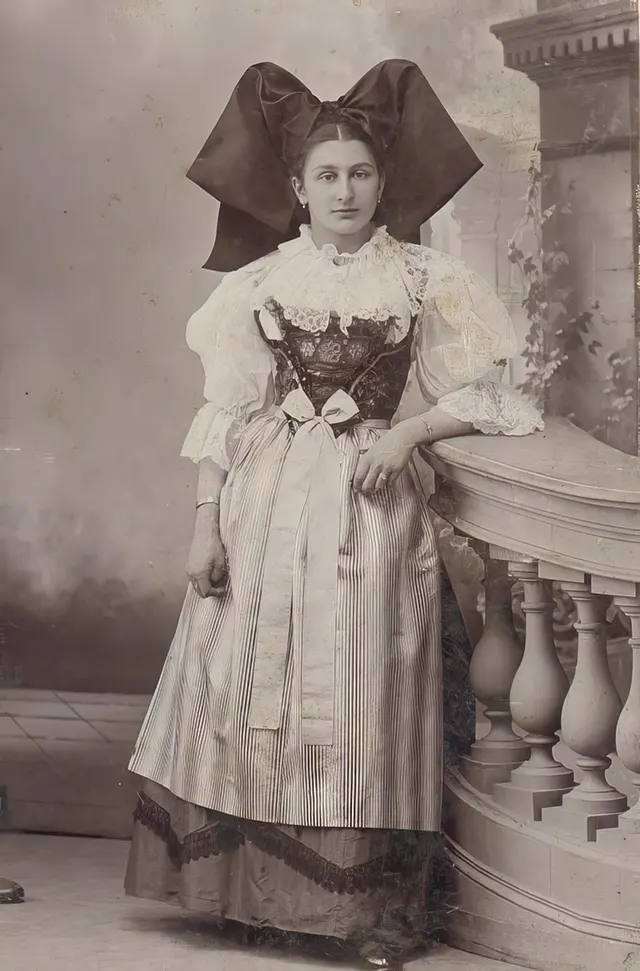
Centered in a studio setting, a young woman wears the unmistakable Schlupfkapp, its dramatic bow fanning out behind her head like a dark halo. The headpiece dominates the composition, balanced by her calm, direct gaze and the soft sheen of the photographic print. An ornamental balustrade and painted backdrop frame her as if she were stepping into a formal portrait of regional pride rather than everyday life.
Lace at the high collar and cuffs contrasts with the structured bodice, while a wide ribbon and striped apron draw the eye down the front of her dress. The careful layering—apron over skirt, embroidery and trim, the tidy waist ties—signals a tradition in which clothing carries meaning, not just decoration. Even without a named town or date, the costume reads as Alsatian folk dress, the Schlupfkapp acting as its visual signature and cultural shorthand.
More than an accessory, the Schlupfkapp in images like this becomes a statement about belonging, femininity, and heritage—an emblem preserved through portraits, postcards, and family albums. Studio photography helped transform regional fashion into a shared symbol, something that could travel beyond the wearer and represent an entire community. Seen today, the photograph remains a vivid window into Alsace’s fashion and culture, where identity was stitched, tied, and bowed into place.