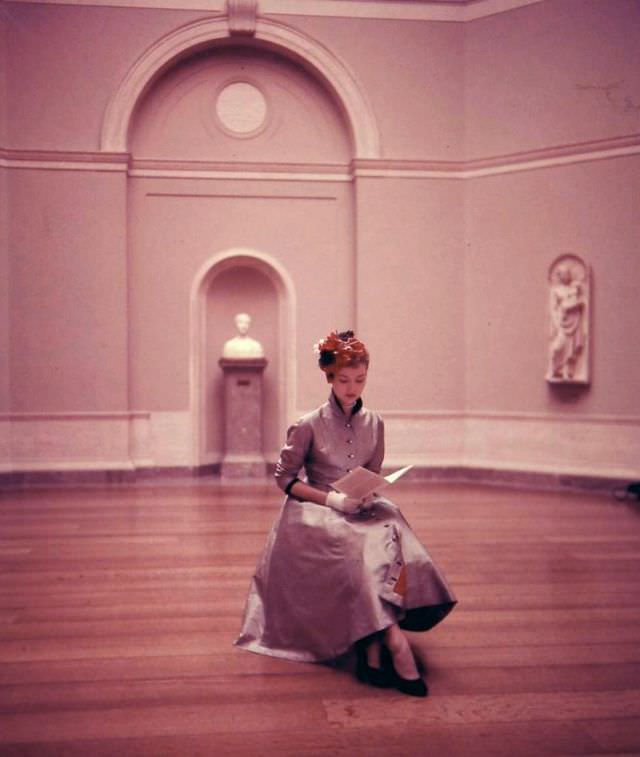
Centered in a grand, museum-like hall, Sheila Kilgore sits poised on a simple chair, her gaze lowered to a folded program or letter held in gloved hands. The airy rotunda around her—arched niches, classical sculpture, and a bust set back in shadow—creates a hushed stage that lets mid-century fashion read like quiet drama. Polished wood floors and soft, pink-tinted color photography lend the scene a formal warmth associated with early 1950s style editorials.
Her Princess coat-dress by Mollie Parnis is the unmistakable focal point, tailored close through the bodice and flaring with sculptural volume at the skirt. The checked, stiff, ridged silk catches the light with a subtle sheen, while the design’s jeweled buttons and refined high collar emphasize the era’s taste for disciplined elegance. A glimpse of vivid red taffeta lining at the hem adds a flash of theatrical color, underscoring how luxury in 1952 often lived in the details.
Set in Washington, D.C., in February 1952, the photograph bridges fashion and culture, placing couture in a civic, gallery-like interior rather than a private salon. That choice of setting amplifies the message behind the clothes: American design asserting polish, artistry, and modern femininity in the public eye. For readers searching Mollie Parnis, 1950s coat-dress trends, or Washington fashion history, the image stands as a richly composed record of how style, architecture, and social life intertwined in the postwar moment.