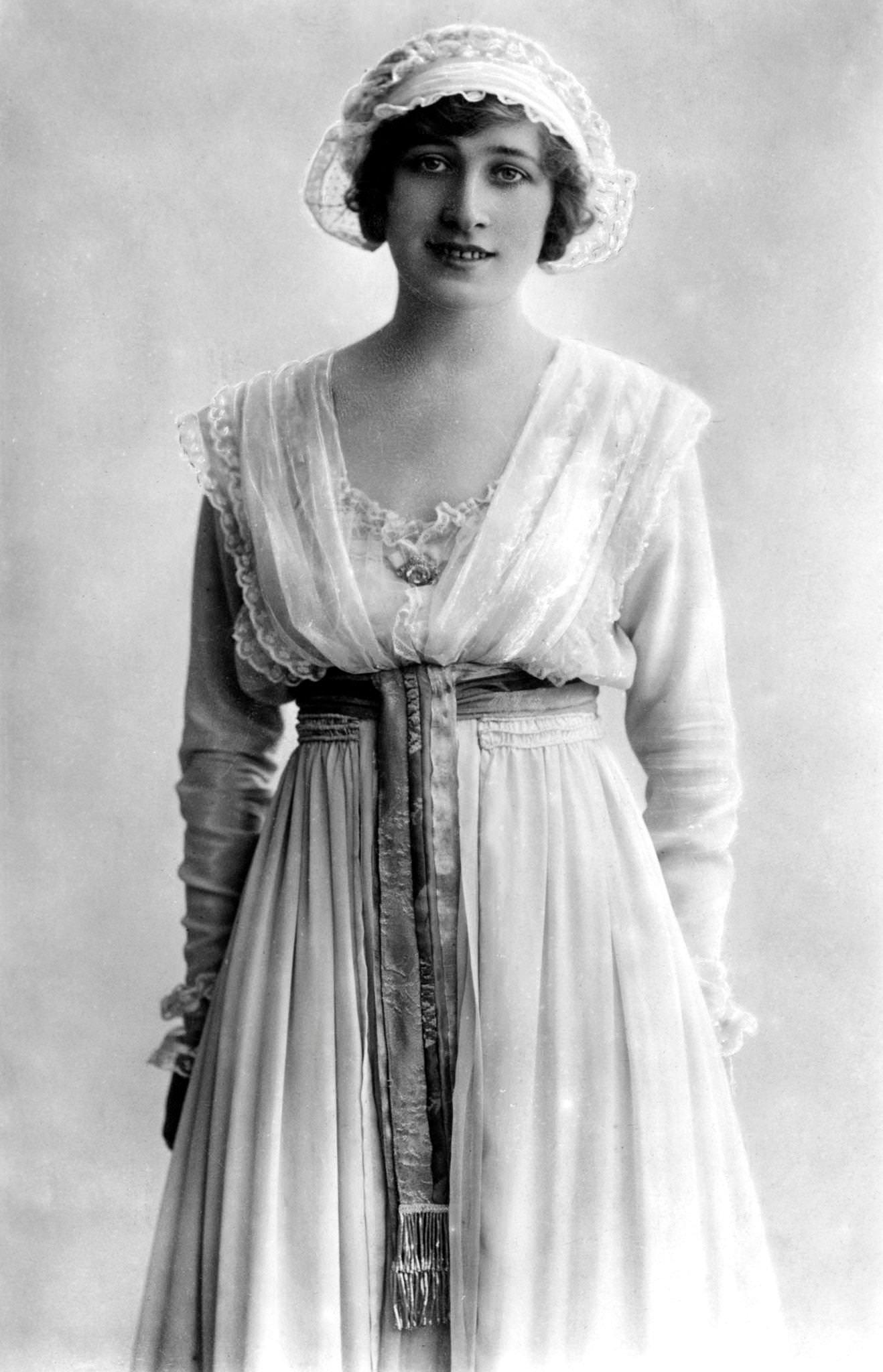
Phyllis Dare stands poised in an early 1900s studio portrait, meeting the camera with a calm, open expression that feels both intimate and carefully composed. Soft lighting smooths the plain backdrop into a gentle gradient, keeping attention on her face and the delicate textures framing it. The overall effect is the polished, aspirational look associated with Edwardian portrait photography, where elegance was communicated as much through restraint as through ornament.
A close look at her outfit reveals the era’s love of light fabrics and decorative trims: a flowing dress with lace-edged layers at the neckline and sleeves, gathered to create a refined silhouette. A wide sash cinches the waist and falls vertically with tasseled detail, adding contrast and movement against the pale material. Her hat—more like a lace-trimmed bonnet or cap—sits low and soft, its translucent edging outlining the curls beneath and underscoring how central millinery was to women’s fashion and public presentation.
Beyond the sitter herself, the portrait serves as a small document of fashion and culture in the Edwardian years, when studio images helped shape ideals of femininity, taste, and modernity. The careful balance of modest coverage and ornate finishing speaks to a moment of transition, with clothing becoming lighter and less rigid while still signaling status and refinement. For anyone researching early 20th-century style, women’s hats, or the visual language of celebrity portraiture, this photograph offers a rich, searchable glimpse into the period’s distinctive aesthetics.