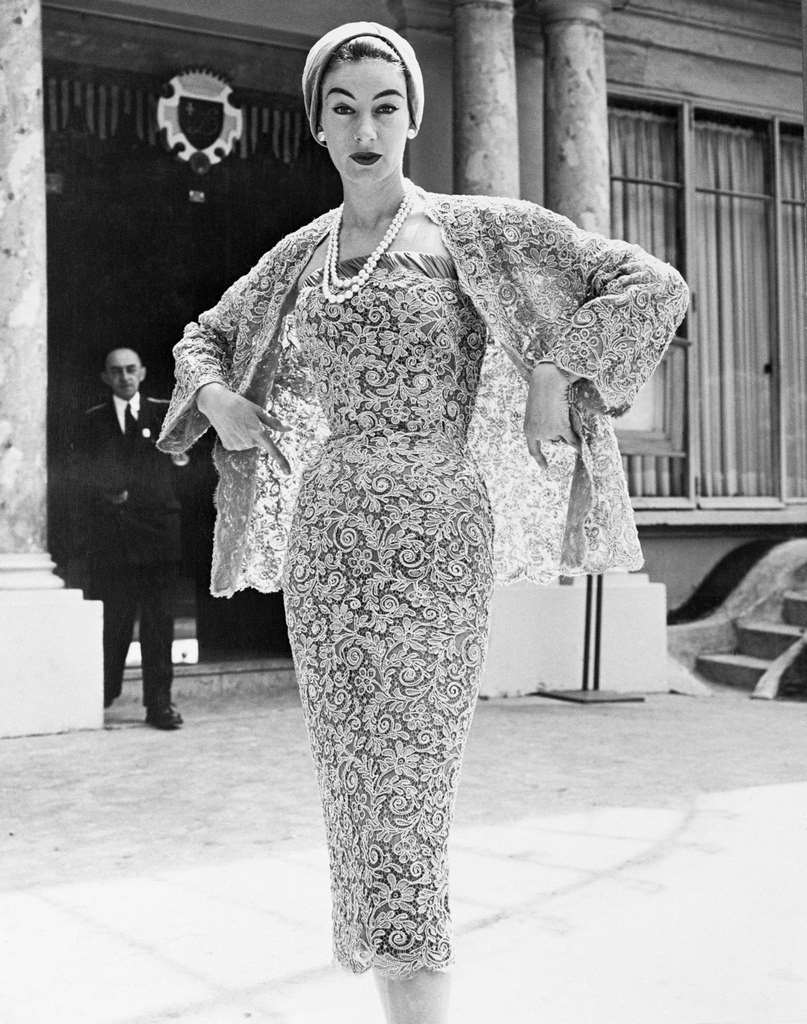
Poised in a sunlit courtyard framed by stone columns, a model advances toward the camera with the practiced assurance of mid-century couture. Her fitted, strapless dress is densely worked with swirling, floral-like embroidery, the texture reading vividly even in monochrome. A cropped jacket worn open echoes the same ornate pattern, while a headscarf and double strand of pearls add a polished, Old World glamour.
Jacques Fath’s name in the title invites a closer look at the ensemble’s balance of structure and softness: a sculpted silhouette tempered by lavish surface detail. The nipped waist and narrow skirt emphasize a classic hourglass line, yet the fabric’s opulence suggests eveningwear made to be admired up close. Makeup and accessories are chosen for crisp contrast—dark lipstick, arched brows, and luminous pearls—turning the presentation into a complete fashion statement rather than a simple garment display.
Behind her, a suited figure lingers in the doorway, and the building’s formal façade situates the scene in an atmosphere of exclusivity associated with high fashion houses and society venues. The photograph reads as both documentation and performance, capturing how couture was marketed through attitude, setting, and meticulous styling. For readers searching vintage fashion photography, Jacques Fath couture, or postwar fashion culture, this image preserves the era’s ideal of elegance: disciplined tailoring made dramatic through rich ornament and confident pose.