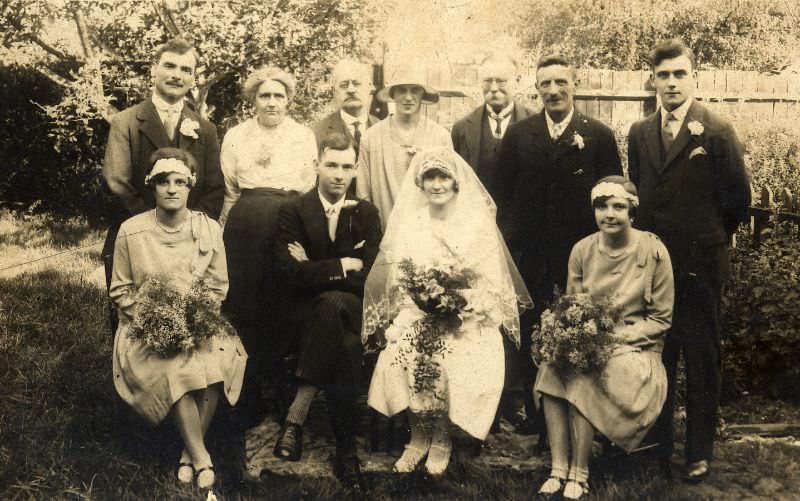
A garden wedding party gathers in soft daylight, arranged in a tidy formal grouping that feels unmistakably 1930s in mood and silhouette. The bride sits centered, her veil falling in a gentle cascade that frames her face and spills over a light-toned gown, while she holds a generous bouquet that reads as carefully chosen rather than extravagant. Around her, attendants and relatives balance the composition—two seated women with matching floral posies, men standing in dark suits with boutonnières, and older figures placed slightly behind, giving the scene both intimacy and quiet ceremony.
What stands out is the era’s preference for clean lines and restrained embellishment: the bridal look emphasizes drape and softness instead of heavy decoration, and the veil becomes the statement piece, lending volume and romance without overwhelming the dress. Bridesmaid fashion echoes the period’s everyday elegance—simple hemlines, long sleeves, and cloche-style hats that nod to late-1920s influence while remaining practical for an outdoor setting. The men’s tailoring, with broad lapels and neatly knotted ties, anchors the lighter fabrics and floral accents, highlighting the classic contrast that defined wedding photography of the time.
Behind the fashionable details lies a snapshot of social history, where weddings blended aspiration with practicality and families marked milestones with what they had, beautifully arranged. The modest fencing and leafy trees suggest a home or local garden venue rather than a grand hall, a setting that makes the clothing choices feel even more intentional—timeless styles meant to photograph well and endure in memory. For anyone drawn to 1930s wedding dresses, vintage bridal veils, and interwar fashion culture, this image offers a vivid, human-scale glimpse of aisle style before modern bridal industry conventions took hold.