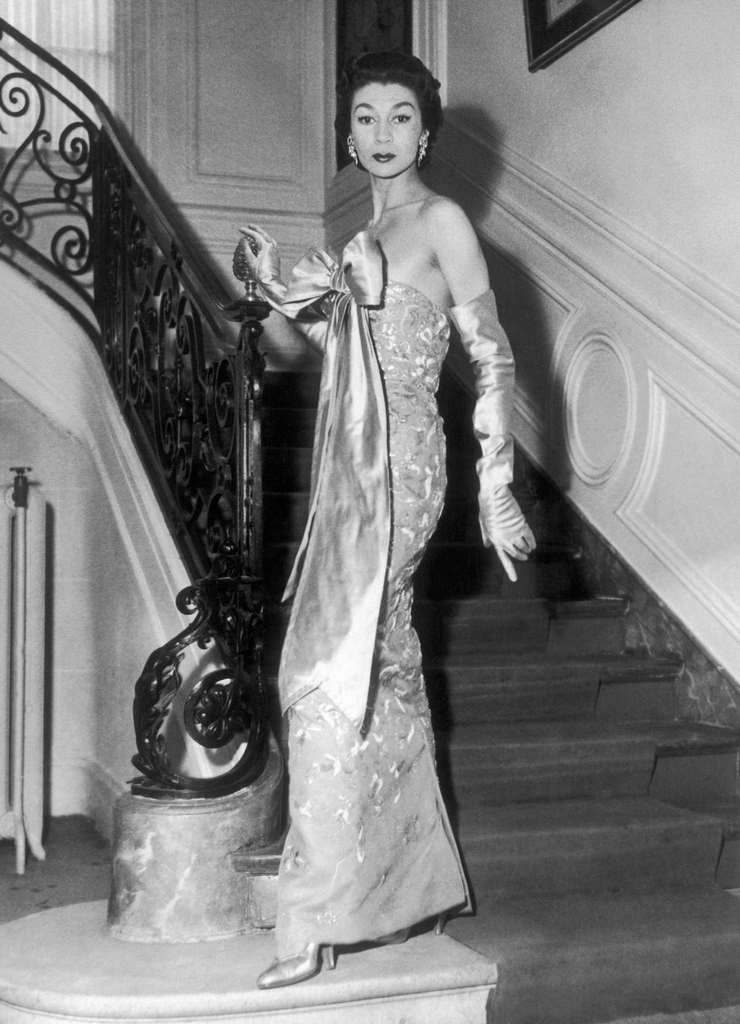
Poised on a sweeping staircase, a model pauses mid-descent in an evening dress by Jacques Fath, the light catching the gown’s sheen as if it were made for candlelit rooms and late arrivals. The strapless silhouette narrows cleanly through the torso before falling into a long, elegant line, while the textured fabric suggests embroidery or raised motifs that shimmer subtly in monochrome. Long opera gloves, pointed heels, and sparkling earrings complete a look designed to be noticed without a single unnecessary flourish.
The setting does as much storytelling as the garment: ornate wrought-iron balustrades curl beside paneled walls, turning the staircase into a stage for haute couture. A dramatic, oversized bow at the bust and a long, draped sash introduce movement against the dress’s sleek structure, balancing softness with architectural control. Even in black and white, the contrast between glossy accessories and patterned textile evokes the tactile luxury that defined mid-century formalwear.
Jacques Fath’s name carries the promise of Paris fashion culture at its most confident, and this photograph reads like a manifesto for postwar glamour—disciplined tailoring, refined ornament, and a deliberate sense of spectacle. For historians of fashion and collectors of vintage style imagery, it offers a clear view of how couture communicated status: not through excess, but through line, finish, and the choreography of a body in motion. As an archival fashion photograph, it remains a striking reference point for eveningwear, red-carpet ancestors, and the enduring language of elegance.