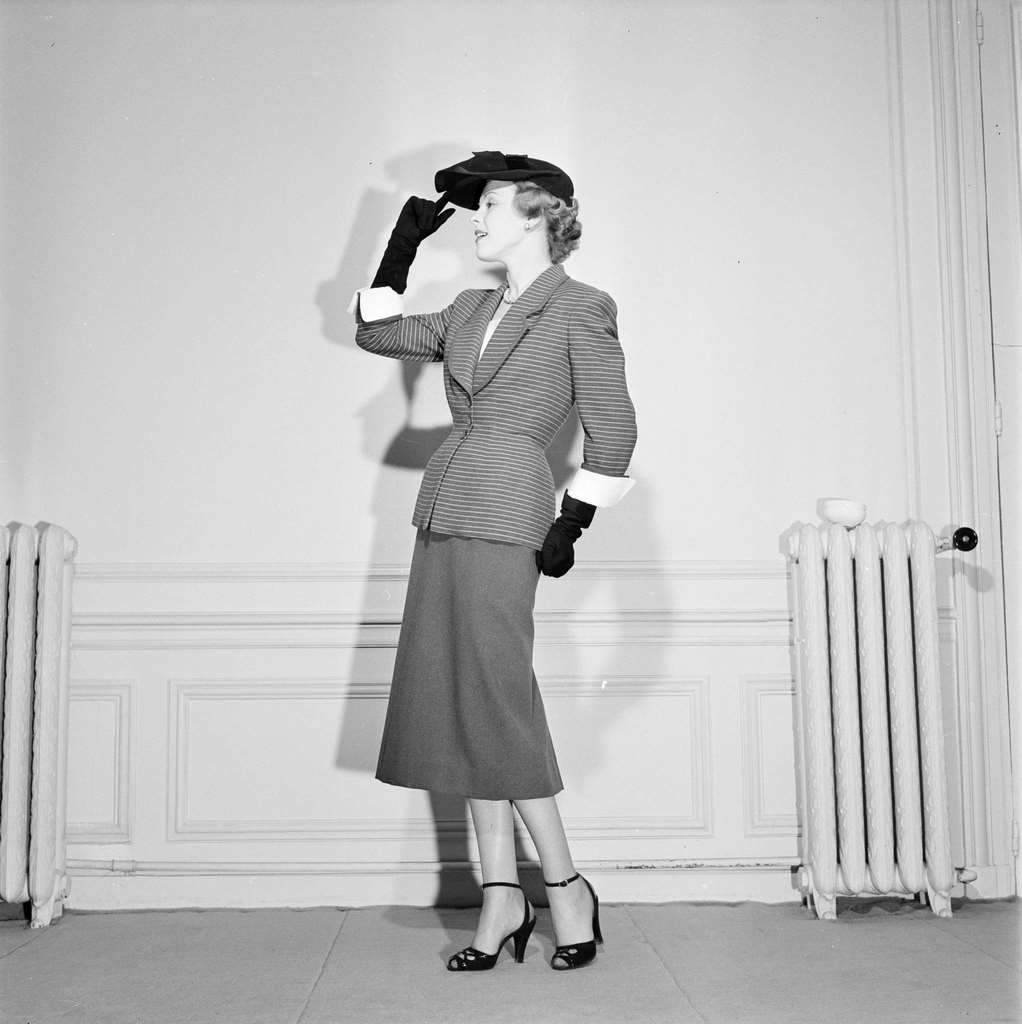
Poised in profile against a spare studio wall, a model presents the crisp elegance associated with the Fashion Collection of “Couturiers Associés” for Spring 1951. The tailored jacket—nipped at the waist and cut with assertive shoulders—pairs with a slim, mid-calf skirt that lengthens the line of the body. A wide-brimmed hat and dark gloves complete the look, adding a note of polished formality that reads as both practical daywear and high-fashion statement.
Details carry the narrative: fine horizontal striping across the jacket, sharply turned cuffs, and a structured lapel that frames the neckline with precision. The model’s lifted hand to the hat brim suggests movement and attitude, as if caught mid-salute on a city street, while ankle-strap heels emphasize a controlled, confident stance. Even the minimal setting—radiators flanking the scene, paneled molding behind—keeps attention fixed on silhouette, proportion, and finish.
Spring 1951 sits in a period when couture and ready-to-wear aspirations often met in images like this, where clean lines and impeccable construction signaled modernity after years of constraint. The ensemble’s balanced mix of severity and grace reflects fashion’s ongoing negotiation between strength and femininity in the early 1950s. For historians of style and collectors of vintage fashion photography, the picture offers a clear, SEO-friendly glimpse into mid-century couture presentation: structured tailoring, coordinated accessories, and the carefully staged confidence of postwar fashion culture.