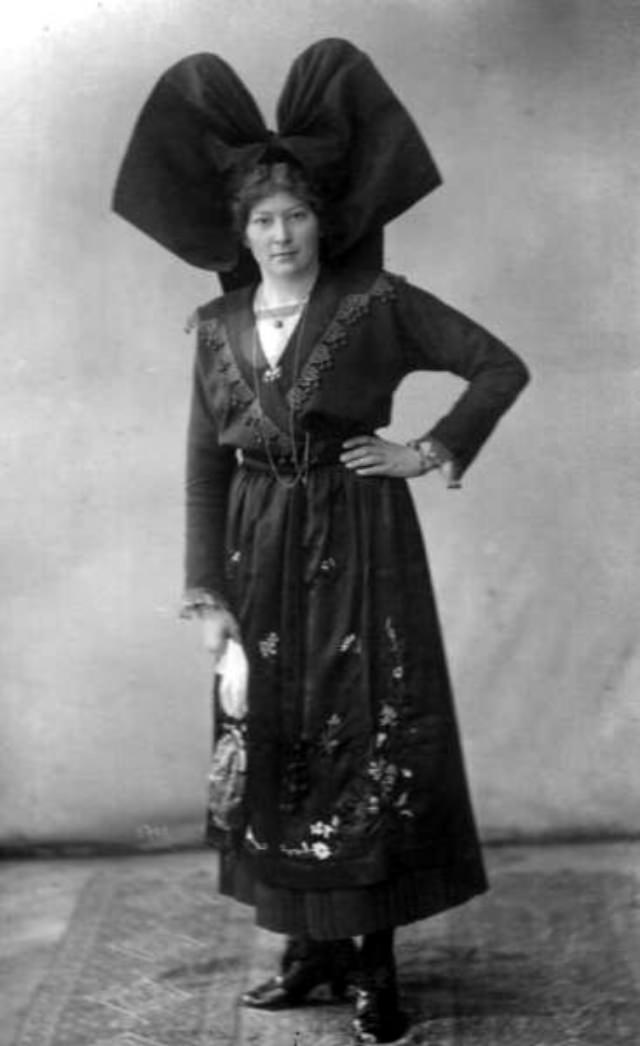
Dominating the frame is the unmistakable Alsatian headdress, a vast bow that rises like wings above the wearer’s head and instantly signals regional identity. The woman stands in a studio setting against a plain backdrop, posed with one hand on her hip and the other lowered, projecting a calm self-assurance. Her dark, long-sleeved dress falls to the ankles, with a fitted waist and a neat line of buttons that gives the silhouette structure.
Closer attention reveals the craft of early 20th-century traditional costume: embroidered floral motifs trail across the skirt and bodice, while a lighter collar and a small pendant at the throat add contrast to the heavy fabric. The cuffs appear finished with delicate trim, echoing the careful ornament elsewhere. Sturdy shoes peek from beneath the hem, grounding the elegance of folk fashion in the practicality of everyday life.
Set within the broader story of European dress, this portrait reads as more than a record of clothing—it’s a statement about belonging, custom, and the way communities carried their heritage into modern times. The theatrical scale of the coiffe, paired with the restrained studio composition, turns regional attire into a focal point worthy of documentation. For anyone searching for Alsace traditional costume, Alsatian women’s fashion, or early 20th-century folk dress, the photograph offers a vivid, dignified glimpse of cultural identity preserved in fabric and form.