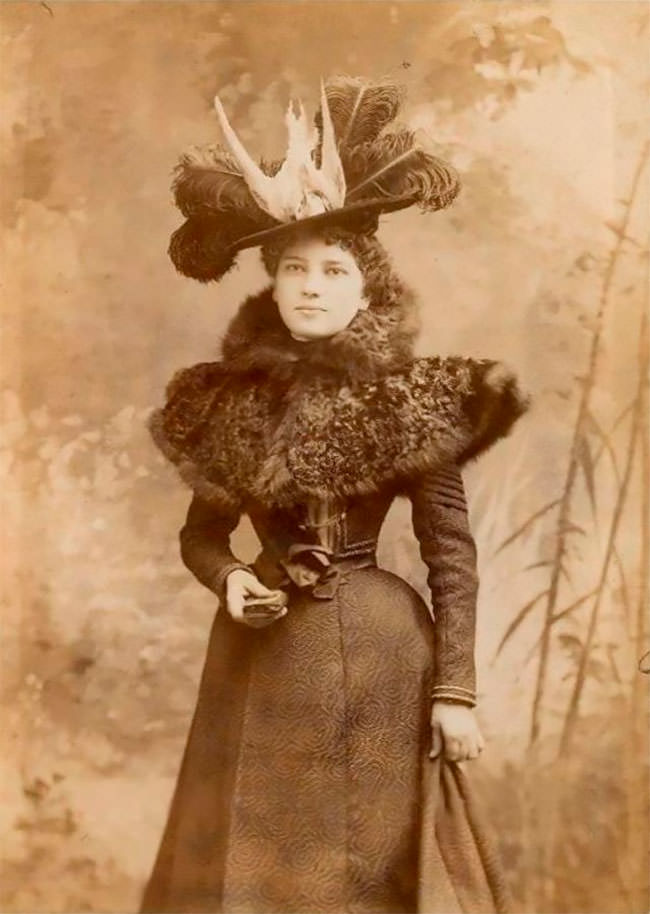
A poised Victorian woman stands in a studio setting, her silhouette defined by a cinched waist and a heavy, richly textured fur stole that frames her face like a collar. The true spectacle rises above her brow: an extravagant hat crowned with dramatic feathers and the unmistakable presence of preserved animal adornment, turning millinery into a kind of wearable cabinet of curiosities. Sepia tones soften the scene, yet the bold contrast between refined tailoring and wild ornament still lands with a jolt.
In the late 19th century, fashion and taxidermy briefly overlapped in a way that now feels both fascinating and unsettling, especially in the craze for “stuffed bird” hats and fur-trimmed accessories. These Victorian animal hats signaled status, access to luxury materials, and an appetite for novelty, while also reflecting an era that collected nature—through museums, parlors, and clothing—with little hesitation. Looking closely at the textures and scale of the headpiece, you can sense how spectacle mattered as much as elegance in Victorian women’s fashion culture.
For readers exploring vintage style, this photo offers a vivid entry point into the history of Victorian millinery, animal-inspired accessories, and the changing ethics of fashion. It’s a reminder that trends are never just about beauty; they’re also about industry, social display, and the stories societies tell themselves about the natural world. Whether you’re here for historical photos, costume research, or the strange allure of taxidermy fashion, the image lingers long after the first glance.